
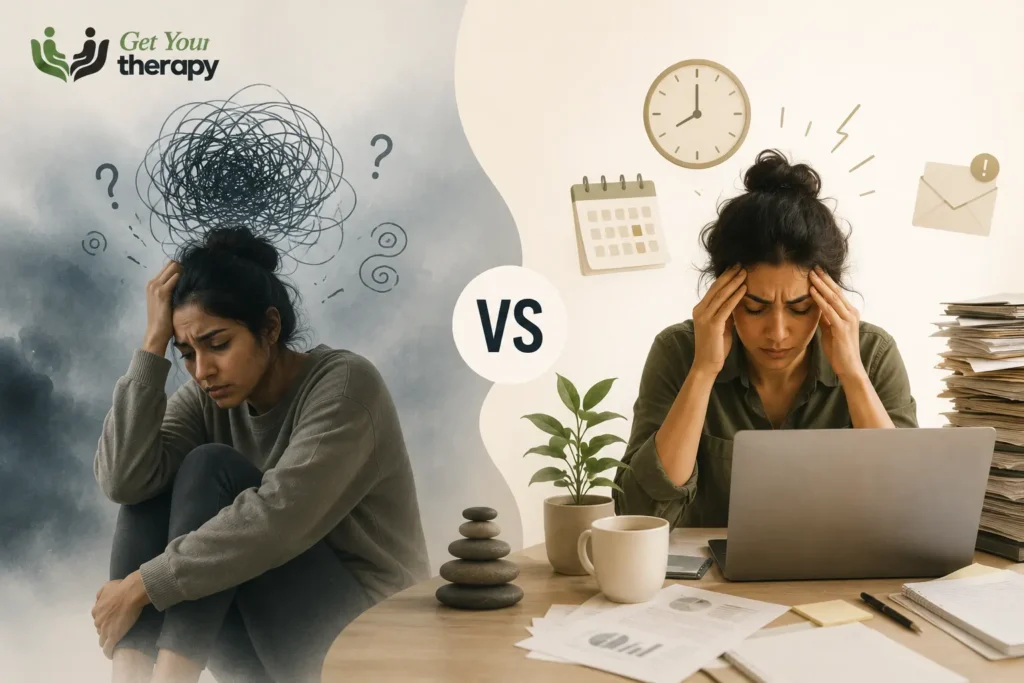
Stress is usually connected to a specific pressure, such as an exam, deadline, financial problem or family conflict. Anxiety can feel similar, but it may continue after the situation improves or appear when there is no immediate danger. The simplest way to understand anxiety vs stress is to ask: Do I know what is causing this, and does the feeling ease when the problem passes?
Both can affect your sleep, concentration, mood and body. The difference is usually found in the trigger, duration and impact on daily life.
Quick Answer: What Is the Difference Between Stress and Anxiety?
Stress Anxiety Usually linked to a current problem or demand May continue without an immediate problem Often reduces when the situation improves Can remain after the trigger has passed Focuses on what is happening now Often focuses on what might happen May improve with rest or practical changes May continue despite rest and reassurance Can become harmful when it is chronic May need professional support if persistent or limiting
The American Psychological Association explains that stress commonly has an external trigger, while anxiety may involve persistent worry even when there is no immediate threat.
Why Do Stress and Anxiety Feel So Similar?
Stress and anxiety activate many of the same physical and emotional responses. That is why it can be difficult to tell which one you are experiencing.
Both may cause:
- racing thoughts
- irritability
- muscle tension
- headaches or stomach discomfort
- a faster heartbeat
- difficulty sleeping
- trouble concentrating
- feeling restless or unable to relax
The NHS notes that anxiety can affect how you feel physically, mentally and behaviourally. Stress can create many of the same symptoms, especially during a difficult or demanding period.
The symptoms alone may not give you the answer. You also need to look at what started them and whether they stop.
Am I Stressed or Anxious? Ask Yourself These Four Questions
1. Can I Identify What Is Causing the Feeling?
You may be dealing with stress if the feeling began around a clear situation, such as an upcoming presentation, a difficult manager, board examinations or a conflict at home.
Anxiety is more likely when the fear continues even though nothing urgent is happening, or when your mind repeatedly searches for the next thing that might go wrong.
Stress often says, “This situation is difficult.”
Anxiety often says, “Something could go wrong, even if everything seems fine right now.”
2. Does It Ease When the Problem Improves?
Stress usually reduces when the demand passes. You may feel better after submitting the project, finishing the exam or resolving the disagreement.
Anxiety may continue even after the situation is over. You finish the presentation, but replay it for hours. Your medical tests are normal, but you remain convinced that something has been missed. The reassurance helps briefly, then the fear returns.
3. Are You Focused on the Present or the Future?
Stress usually responds to something happening now. Anxiety often centres on anticipation.
You may worry about failing before you have started, being judged before anyone has reacted, or losing your job despite receiving no warning. This does not mean the fear feels imaginary. It means your mind is responding to a possible future threat as though it is already happening.
4. Is It Changing How You Live?
This is often the most useful question.
Stress may make a difficult week feel exhausting. Anxiety may start changing your decisions. You avoid calls, meetings, travel, social situations or responsibilities because avoiding them feels safer.
When fear begins narrowing what you feel able to do, it deserves attention.
For a closer look at different anxiety patterns, read our guide to the types of anxiety disorders.
Why Anxiety Is Often Missed in India
In many Indian workplaces, homes and educational settings, ongoing pressure is treated as expected.
Long working hours may be described as a sign of ambition. Constant exam pressure may be presented as necessary for success. Financial responsibility towards parents, family expectations around marriage and limited personal space in a joint family can all create genuine stress.
The problem is not that these pressures are imaginary. The problem is that anxiety may be normalised and missed because everyone around you appears to be under similar pressure.
The World Health Organisation identifies excessive workloads, long hours, limited job control, poor support and job insecurity as risks to mental health. Being common does not make these conditions harmless.
A useful distinction is this: stress can be understandable and still become unhealthy. Anxiety can have a real trigger and still become disproportionate or persistent.
Can Stress Turn Into Anxiety?
Prolonged stress can contribute to anxiety symptoms or make existing anxiety worse, but stress does not automatically become an anxiety disorder.
If your body remains under pressure for weeks or months, it can become increasingly difficult to transition out of a state of alertness. Even after one problem ends, your mind may continue expecting the next one.
The WHO notes that persistent stress can affect daily functioning and may worsen mental health conditions, including anxiety. That is why chronic stress should not be dismissed simply because its cause is understandable.
What Should You Do Next?
If the feeling appears to be stress, start with the source. Reduce unnecessary demands, ask for practical support, protect sleep and create time when work or study cannot reach you.
If the feeling seems more like anxiety, notice what you fear, what you avoid and how often reassurance helps. Breathing exercises, regular movement, reduced caffeine and a consistent routine may ease symptoms, but they should not become substitutes for support when anxiety is affecting daily life.
For a complete overview of symptoms and treatment, read Anxiety: What It Is, Why It Happens, and How to Get Help in India.
Not Sure Whether It Is Stress or Anxiety?
You do not need to identify the exact label before speaking with someone.
A therapist can help you understand what is driving the symptoms, whether avoidance is keeping them going, and what kind of support may be useful.
Find a therapist for anxiety in India
When Should You Speak to a Therapist?
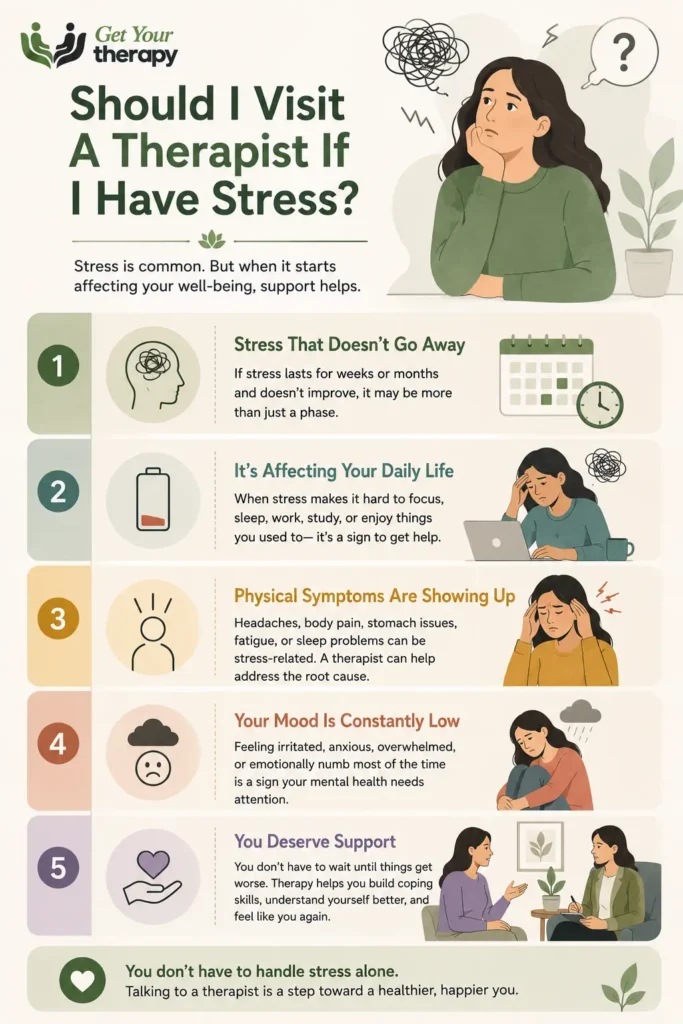
Consider professional support if stress or anxiety:
- continues for several weeks
- regularly disrupts sleep
- affects work, studies or relationships
- causes repeated physical symptoms
- leads you to avoid serious situations
- Feels difficult to manage despite trying to cope
You do not need to wait until it becomes unbearable. Seeking help earlier can make it easier to understand the pattern before it becomes more disruptive.
One Thought Before You Go
You do not have to prove whether your experience is “serious enough” before asking for help.
Whether the cause is stress, anxiety or a combination of both, what matters is how much it is affecting your life.
At GetYourTherapy, you can connect with qualified therapists based on your concerns, language, budget and availability.