
If you’re looking for anxiety treatment in India, the good news is that anxiety is one of the most treatable mental health conditions. For many people, a combination of therapy, lifestyle changes, and, in some cases, medication can significantly reduce symptoms and improve their quality of life. The first step is recognising that persistent anxiety isn’t something you simply have to “live with.”
Feeling anxious before an exam, an interview, or an important life event is a normal reaction.
Feeling anxious most days without knowing why isn’t.
More than 38 million people worldwide are estimated to be living with anxiety disorders, and millions in India experience anxiety that often goes unrecognised or untreated. Many people don’t seek help because they mistake anxiety for stress, overthinking, or simply having a “worried personality.”
This guide explains what anxiety really is, why it often looks different in India, what symptoms to look for, and the most effective anxiety treatment options available today.
Quick Answer
Anxiety is your body’s natural response to stress or perceived danger. It becomes an anxiety disorder when worry, fear, or physical symptoms continue for weeks or months, interfere with daily life, and don’t improve on their own.
Research consistently shows that evidence-based therapies such as Cognitive Behavioural Therapy (CBT) are among the most effective first-line treatments for anxiety, while medication may also be recommended for moderate to severe symptoms depending on individual needs.
In 30 Seconds
You may benefit from anxiety treatment if:
- ✔ You worry most days and struggle to switch your thoughts off.
- ✔ Anxiety is affecting your work, studies, sleep, or relationships.
- ✔ Physical symptoms like chest tightness, headaches, or stomach problems happen without a clear medical cause.
- ✔ You avoid situations because they make you anxious.
- ✔ Rest or reassurance only helps temporarily.
What Is Anxiety?
Think of anxiety as your body’s built-in alarm system.
When there’s genuine danger, it helps keep you alert and prepared. The problem begins when that alarm keeps going off even when you’re safe.
Anxiety disorder isn’t about “thinking too much” or being weak. It’s a recognised mental health condition where your brain continues to respond as though there’s a threat, even when there isn’t one. Over time, this can affect your concentration, sleep, relationships, confidence, and physical health.
One important thing to remember:
Everyone experiences anxiety. Not everyone has an anxiety disorder.
The difference is how often it happens, how intense it feels, and whether it starts controlling your life instead of simply passing.
Why Anxiety Often Looks Different in India?
Most global guides describe anxiety as excessive worry or fear.
That’s true, but it’s only part of the picture.
In India, anxiety is often experienced through physical symptoms first. People commonly visit a physician for headaches, stomach pain, chest discomfort, fatigue, or dizziness before realising anxiety may be contributing to those symptoms. This can delay the right treatment because attention naturally focuses on physical health first.
Several factors also make anxiety particularly challenging in the Indian context:
- Academic pressure from a young age.
- Competitive workplaces and long working hours.
- Financial responsibilities towards family.
- Social expectations around career and marriage.
- Mental health stigma discourages people from asking for help.
Research from multiple Indian reports also suggests that many people describe anxiety in everyday language, such as constant overthinking, feeling behind in life, or never being able to switch off, rather than using clinical terms.
Common Anxiety Symptoms
Anxiety affects everyone differently, but most symptoms fall into four broad areas.
Physical symptoms
- Racing heart
- Chest tightness
- Muscle tension
- Headaches
- Stomach discomfort
- Difficulty sleeping
- Feeling constantly tired
Emotional symptoms
- Constant worry
- Feeling on edge
- Irritability
- Difficulty relaxing
- Fear that something bad will happen
Thinking patterns
- Overthinking everyday situations
- Expecting the worst
- Difficulty concentrating
- Replaying conversations repeatedly
Behavioural changes
- Avoiding situations that trigger anxiety
- Seeking constant reassurance
- Procrastinating because of fear
- Withdrawing from friends or family
If several of these sound familiar, it doesn’t automatically mean you have an anxiety disorder—but it does suggest it’s worth paying closer attention.
If you’re unsure whether your symptoms are related to work pressure, you may also find our guide on Burnout vs Stress: How to Tell the Difference helpful. If anxiety is affecting your job specifically, Anxiety at Work: Signs, Causes and How to Cope can help you understand what you’re experiencing before seeking professional support.
What Causes Anxiety?
There’s rarely one single cause.
Instead, anxiety usually develops through a combination of biological, psychological, and life experiences.
Research suggests several factors can increase the likelihood of developing an anxiety disorder, including genetics, prolonged stress, perfectionism, major life changes, adverse childhood experiences, and ongoing uncertainty.
In India, additional pressures such as competitive education, financial responsibilities, rapid urbanisation, and changing family expectations often add to this burden. These factors don’t cause anxiety on their own, but they can make existing vulnerability more noticeable.
One thing that often surprises people is this:
Anxiety isn’t a sign that you’re unable to cope. It’s often a sign that your mind has been trying to cope with too much for too long.
What Types of Anxiety Disorders Are There?
Not everyone experiences anxiety in the same way. Understanding the type of anxiety you’re dealing with can make it easier to choose the right treatment and therapist.
Generalised Anxiety Disorder (GAD)
This is the most common type of anxiety disorder.
People with GAD worry excessively about everyday things such as work, money, health, or family—even when there’s no immediate problem to solve. The worry often feels impossible to control and can continue for months.
Common signs include:
- Constant worrying
- Feeling restless or tense
- Difficulty concentrating
- Poor sleep
- Fatigue
Social Anxiety Disorder
This isn’t simply being shy.
Social anxiety is the fear of being judged, embarrassed, or negatively evaluated by others. It can make everyday situations like speaking in meetings, attending social events, or even ordering food feel overwhelming.
People with social anxiety often avoid situations they would otherwise enjoy, which can gradually affect their confidence, career, and relationships.
Related reading: Social Anxiety in India: When Shyness Becomes Something More
Panic Disorder
Panic attacks can feel frightening because they often come without warning.
During a panic attack, you may experience:
- Chest pain
- Racing heartbeat
- Shortness of breath
- Sweating
- Dizziness
- Feeling like you’re losing control
Although panic attacks feel dangerous, they are not usually life-threatening. With the right treatment, they become much more manageable
Health Anxiety
Health anxiety involves persistent worry about having a serious illness despite repeated reassurance or normal medical tests.
You may find yourself:
- Frequently searching for symptoms online
- Visiting multiple doctors
- Constantly checking your body
- Feeling reassured only briefly before worrying again
Obsessive-Compulsive Disorder (OCD)
OCD is more than liking things to be organised.
It involves obsessions (unwanted, intrusive thoughts) and compulsions (repetitive behaviours or mental rituals performed to reduce anxiety).
Because OCD requires specialised treatment, it’s important to work with a therapist experienced in Exposure and Response Prevention (ERP) alongside CBT.
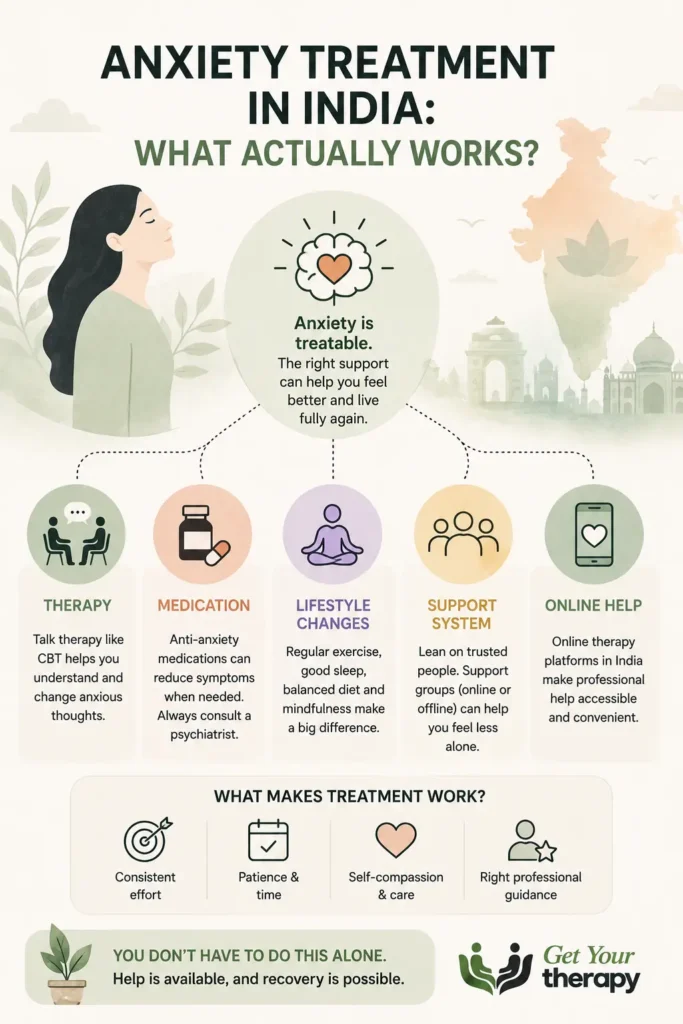
Anxiety Treatment in India: What Actually Works?
One of the biggest myths about anxiety is that you simply need to “think positively.”
Research says otherwise.
The most effective anxiety treatment in India depends on your symptoms, their severity, and how much they’re affecting your daily life. For many people, treatment includes therapy, lifestyle changes, and, when appropriate, medication.
1. Cognitive Behavioural Therapy (CBT)
CBT is considered the first-line psychological treatment for most anxiety disorders worldwide.
Instead of only talking about your worries, CBT helps you understand how your thoughts, emotions, and behaviours influence each other. Over time, you learn practical strategies to respond differently to anxious thoughts rather than automatically believing them.
Many people notice meaningful improvement after 8 to 16 sessions, although this varies depending on the individual and the type of anxiety being treated.
If you’re wondering whether CBT is right for you, read What Type of Therapy Is Best for Anxiety?
2. Medication
Medication isn’t necessary for everyone.
However, if anxiety is moderate to severe, affecting work, relationships, or daily functioning, a psychiatrist may recommend medication alongside therapy.
Commonly prescribed medications include SSRIs, which usually take several weeks to reach their full effect. Medication works best when it’s part of a broader treatment plan rather than the only solution.
3. Lifestyle Changes That Support Recovery
Lifestyle changes won’t cure an anxiety disorder on their own, but they can make treatment more effective.
Research supports habits such as:
- Maintaining a regular sleep schedule
- Limiting excessive caffeine
- Exercising regularly
- Practising breathing or relaxation techniques
- Reducing prolonged stress where possible
These strategies work best alongside professional support rather than replacing it.
How to Find the Right Anxiety Therapist in India?
Finding the right therapist matters just as much as deciding to start therapy.
Look for someone who:
- Has experience treating anxiety disorders.
- Uses evidence-based approaches such as CBT.
- Makes you feel comfortable asking questions.
- Explains their treatment approach clearly.
If you’re not sure where to begin, our guide on How to Find a Therapist for Anxiety walks you through the process step by step. Before booking your first session, you may also find Questions to Ask a Therapist Before You Book helpful.
When Should You Seek Professional Help?
Occasional anxiety is part of life.
You should consider seeking professional support if:
- Anxiety has lasted for several weeks or months.
- It’s affecting your work or studies.
- You’re avoiding situations because of fear.
- Sleep is regularly disrupted.
- Physical symptoms continue despite normal medical tests.
- You’re finding it difficult to enjoy everyday life.
You don’t need to wait until anxiety becomes overwhelming before asking for help. Many people recover more quickly when treatment begins early.
At GetYourTherapy, you can connect with qualified therapists experienced in treating anxiety, helping you find support that matches your concerns, language, and preferences.
👉 Find an Anxiety Therapist in India
Sources
- World Health Organisation (WHO) – Anxiety Disorders
- American Psychological Association (APA) – Anxiety &
- Evidence-Based Treatments National Institute for Health and
- Care Excellence (NICE) – Generalised Anxiety Disorder
- Guidelines Indian Journal of Psychiatry – Treatment Gap in
- Mental Health in India: Rehabilitation Council of India (RCI)
- National Institute of Mental Health and Neurosciences (NIMHANS), Indian Council of Medical Research (ICMR) –
- Tele-Mental Health Guidance