

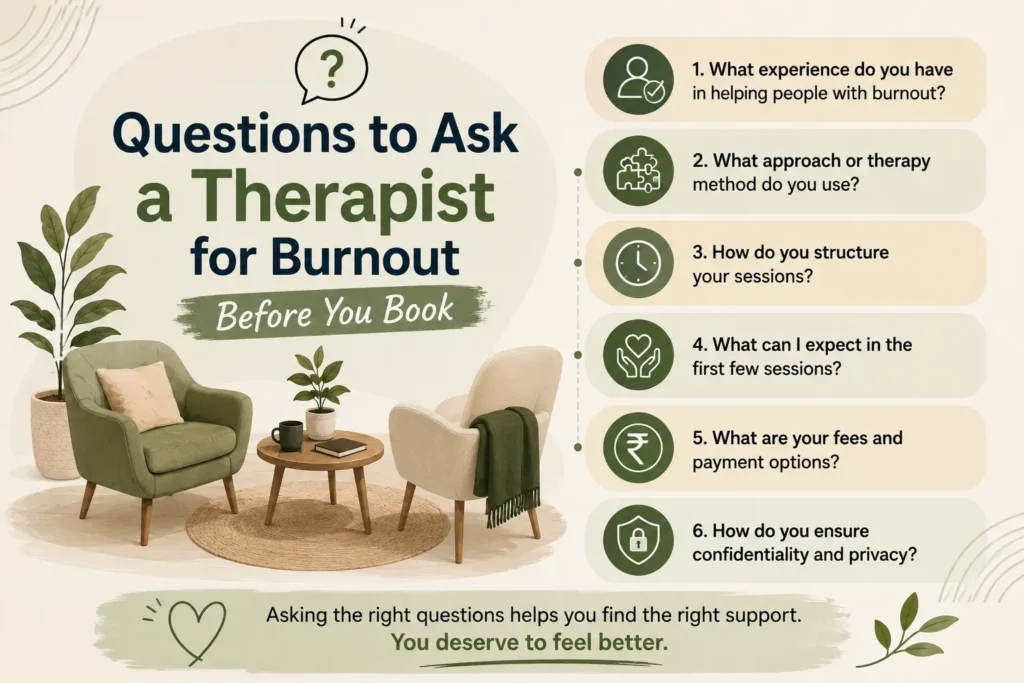
Before booking a session, consider these questions to ask a therapist about burnout: ask about their experience treating workplace stress, the therapy approaches they use, how they measure progress, and whether they offer online sessions. More importantly, ask yourself whether you feel comfortable enough to be honest with them. Research consistently shows that the relationship between a therapist and client, known as the therapeutic alliance, is one of the strongest predictors of successful therapy, often more important than the specific therapy approach.
Finding the right therapist isn’t about asking the most questions.
It’s about asking the right questions.
Quick Answer
Before your first appointment, consider these questions to ask a therapist about burnout :
- ✔ Have you worked with people experiencing burnout?
- ✔ What type of therapy do you usually use?
- ✔ How will we know therapy is working?
- ✔ How often should we meet?
- ✔ What happens if I don’t feel we’re the right fit?
The answers will tell you much more than a list of qualifications ever could.
In 30 Seconds
Before booking, make sure you know:
- ✔ Their experience with burnout.
- ✔ Their therapy approach.
- ✔ Session frequency.
- ✔ How progress is measured.
- ✔ Whether you feel comfortable talking to them.
Remember, you’re not interviewing someone for a job. You’re choosing someone to support your mental health.
7 Questions to Ask Before Booking a Therapist
1. Have You Helped People Recover From Burnout Before?
This is the most important question to ask therapist about burnout.
Burnout isn’t simply feeling stressed. It often involves emotional exhaustion, perfectionism, work-life imbalance, anxiety, and difficulty switching off after work. A therapist who regularly works with burnout is more likely to understand these patterns and know how to treat them.
A reassuring answer might sound like:
“Yes, I regularly work with professionals experiencing workplace stress, burnout, anxiety, or emotional exhaustion.”
If the answer feels vague or dismissive, it may be worth exploring other options.
2. What Type of Therapy Do You Usually Use?
There isn’t one therapy that’s right for everyone.
Many therapists use Cognitive Behavioural Therapy (CBT) because it helps people recognise unhealthy thinking patterns, improve boundaries, and manage chronic stress. Others may recommend Acceptance and Commitment Therapy (ACT) or mindfulness-based approaches, depending on your situation.
Instead of looking for one “best” therapy, ask why they’re recommending a particular approach.
If you’d like to understand the differences first, read our guide on What Type of Therapy Is Best for Burnout?
3. How Will We Know Therapy Is Working?
This is a question very few people ask, but they should.
A good therapist won’t promise that you’ll feel better after one or two sessions.
Instead, they should explain how you’ll measure progress together.
That might include:
- feeling less emotionally exhausted
- sleeping better
- setting healthier work boundaries
- improving relationships
- enjoying life outside work again
Recovery isn't measured by one good session. It's measured by gradually getting your life back.
4. How Often Should We Meet?
Some people assume therapy should continue forever.
Others think one session will solve everything. Neither is usually true.
Your therapist should recommend a schedule based on your symptoms, goals, and progress—not a fixed package. Asking this question also helps you understand whether therapy will realistically fit your routine and budget.
5. Do You Offer Online Therapy as Well?
Life doesn’t always make it easy to attend therapy in person.
If you travel frequently, work long hours, or simply want more flexibility, ask whether the therapist offers online sessions. Research has found that therapist-guided online therapy can be just as effective as face-to-face therapy for many common mental health concerns, including stress, anxiety, and burnout.
The most important factor isn’t where the session happens.
It’s whether you can attend consistently.
If you’re still deciding between both options, our guide on Online Therapy for Burnout: Is It Worth It? compares the benefits of online and in-person therapy.
6. What Happens If I Don’t Feel We’re the Right Fit?
This question surprises many therapists in a good way.
One of the biggest myths about therapy is that once you choose a therapist, you have to stay with them.
You don’t.
A professional therapist understands that not every client will be the right fit. If you don’t feel heard, understood, or comfortable after a few sessions, it’s okay to explore another therapist.
Choosing a different therapist isn't giving up on therapy. It's part of finding the right support.
7. Is There Anything I Should Do Before My First Session?
A good therapist will usually suggest simple ways to prepare.
They might ask you to think about:
- What brought you to therapy?
- What you hope will change.
- Situations that have been most difficult recently.
- Questions you’d like to ask.
You don’t need to have everything figured out before your first session.
You just need to show up honestly.
If you’re feeling nervous, reading What to Expect in Your First Therapy Session can help you know exactly what usually happens, while How to Get the Most Out of Therapy shares practical ways to make every session more meaningful.
What Nobody Tells You About Choosing a Therapist?
People often spend weeks looking for the “perfect” therapist. Very few spend five minutes asking the right questions.
The right therapist isn’t the one with the longest list of qualifications.
It’s the one who helps you feel safe enough to say the things you’ve been hiding from everyone else. That’s where healing usually begins.
Common Myth
“I’ll know after one therapy session whether this therapist is right for me.”
Sometimes you will.
Sometimes you won’t.
Unless something feels clearly uncomfortable or unsafe, many therapists recommend giving the relationship two or three sessions before deciding. Building trust takes time, and the first session is often focused on understanding your history rather than solving your problems.
You’re Choosing More Than a Therapist
You’re choosing someone you’ll trust with some of the most difficult conversations of your life.
Take your time. Search questions to ask a therapist about burnout.
Listen to how you feel during the conversation, not just what the therapist says. If you’re still looking for the right support, our guides on How to Find a Therapist for Burnout in India and Signs You Need Therapy for Burnout can help you make a confident decision before booking.
👉 Find the Right Therapist for Burnout
Sources
- American Psychological Association (APA): Therapeutic Alliance and Psychotherapy Outcomes
- World Health Organisation (WHO): Burn-out in ICD-11
- Journal of Medical Internet Research: Therapist-Guided Online Psychological Interventions
- National Institute for Health and Care Excellence (NICE): Common Mental Health Problems
- Rehabilitation Council of India (RCI): Professional Standards for Mental Health Professionals