
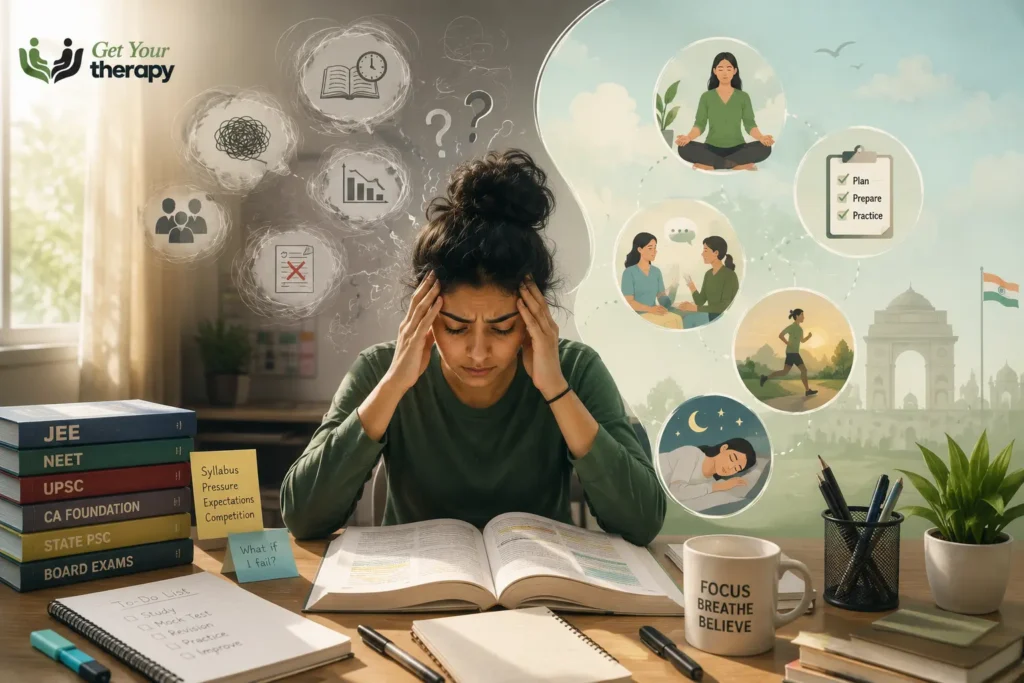
Exam anxiety is more than feeling nervous before a test. It becomes a concern when fear starts affecting your sleep, concentration, appetite, confidence or ability to perform even when you have prepared well. For students facing JEE, NEET, UPSC, CA, board exams or other competitive tests in India, the pressure may come from the exam itself, family expectations and the belief that one result will decide the future.
The good news is that exam anxiety can be managed. The aim is not to remove every nervous feeling, but to reduce anxiety enough that you can think clearly and use what you have learned.
Quick Answer: How Can You Manage Exam Anxiety?
To manage exam anxiety, use a realistic study plan, practise under exam-like conditions, protect your sleep, reduce last-minute cramming and learn a simple calming technique for physical symptoms. If anxiety repeatedly causes panic, avoidance, sleeplessness or a drop in functioning, speaking with a therapist can help.
Is It Normal Exam Stress or Exam Anxiety?
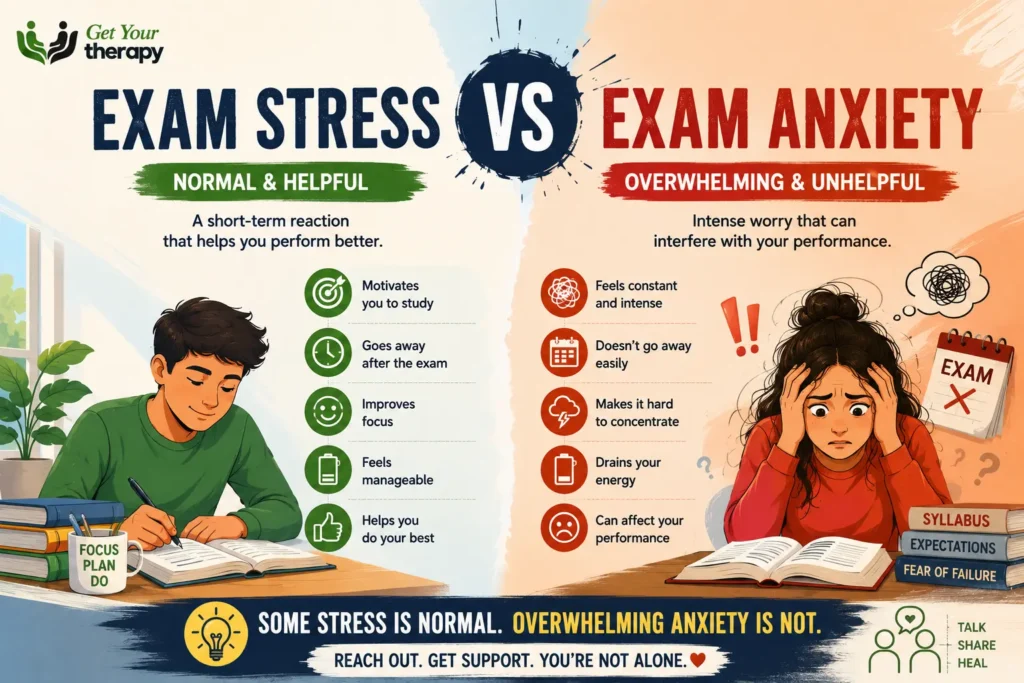
Some pressure before an exam is normal and can even help you focus. The difference is how intense the feeling becomes and how much it interferes with your life.
| Normal exam stress | Exam anxiety |
|---|---|
| Appears close to an exam | May begin weeks or months earlier |
| Encourages preparation | Makes studying or starting difficult |
| Reduces after the exam | Continues through results and future exams |
| Causes manageable nervousness | May cause panic, blanking out or avoidance |
| Does not seriously disrupt daily life | Affects sleep, appetite, mood or performance |
Exam anxiety can show up before, during or after the test. You may study for hours but feel unable to remember anything, avoid mock tests because the score feels frightening, or replay every answer after the exam has ended.
Why Exam Anxiety Feels So Intense in India?
Indian students are often preparing for more than a test. The result may be connected to a college seat, a career path, years of coaching fees or a family’s hopes for the future.
- Competitive examinations such as JEE, NEET, UPSC and CA can involve large syllabuses, low selection rates, repeated attempts and long preparation periods.
- Board examinations may also feel final because marks influence subject choices, university admissions and how students believe they will be viewed by relatives or peers.
Family support can protect students, but family pressure can increase anxiety when every conversation becomes about marks, rank or comparisons. Comments such as
- “Your cousin managed it”
- “This is your only chance”
May be intended as motivation, but it can make one result feel like a judgment of the student’s entire worth.
CBSE’s annual psychosocial counselling programme offers support before and after board results, reflecting how seriously exam-related stress is now recognised. India’s Ministry of Education has also created a National Task Force to address mental-health concerns in higher education.
What Are the Signs of Exam Anxiety?
Exam anxiety does not always look like visible panic. It may appear as:
- Repeatedly postponing the study despite wanting to begin
- Feeling blank during tests
- Racing thoughts or expecting failure
- Headaches, nausea, trembling or a fast heartbeat
- Sleeping too little or studying through the night
- Checking other students’ progress constantly
- Crying, becoming irritable or withdrawing from family
- Avoiding mock tests, classes or the examination itself
One difficult paper does not mean you have an anxiety problem. Pay closer attention when the pattern repeats, becomes harder to control or begins affecting everyday functioning.
To understand whether these symptoms may be part of a broader anxiety pattern, read Types of Anxiety Disorders: GAD, Social Anxiety, Panic and OCD Explained.
How to Manage Exam Anxiety Before the Test?
1. Replace the perfect timetable with a usable one
An unrealistic twelve-hour study plan often creates more guilt than progress. Divide the syllabus into small, specific tasks and leave space for meals, breaks, revision and unexpected delays.
“Revise two chapters and complete 30 questions” is more useful than “study chemistry all day.”
2. Practise the exam, not only the syllabus
If anxiety appears when the clock starts, knowledge alone may not solve it. Use timed mock tests and past papers in conditions similar to the actual exam.
Start with shorter practice sessions if a full mock feels overwhelming. Gradual exposure helps your brain become more familiar with the situation instead of treating every test as a new threat.
3. Protect sleep, especially near the exam
Studying through the night may create more revision time, but poor sleep can make concentration, recall and emotional regulation harder. Keep a regular sleep schedule and avoid turning the final week into a cycle of caffeine and all-night study.
4. Reduce comparison
Another student’s mock score does not tell you what you should study next. Limit rank discussions, coaching-group messages and social-media content if they leave you more anxious than informed.
Use your own mistakes as the study plan: identify what went wrong, correct it and test it again.
5. Calm the body before arguing with the mind
When your heart is racing, telling yourself to “stop worrying” rarely works. Try breathing out more slowly than you breathe in for one or two minutes. Relax your jaw, lower your shoulders and place both feet on the floor.
This will not solve the entire problem, but it can lower physical arousal enough to help you return to the question in front of you.
What Should You Do During the Exam?
Read the instructions before looking at the hardest question. Begin with a section you can attempt confidently, keep track of time without checking the clock every minute and move on when one answer is consuming too much time.
If your mind goes blank, pause rather than forcing recall. Take one slow breath, write down any related keyword you remember and return to the question later. A temporary blank does not mean everything you studied has disappeared.
How Can Parents Help Without Adding Pressure?
Ask what kind of support the student needs instead of assuming. Some students need help planning; others need fewer questions about preparation.
Parents can help by:
- Keeping meals and routines steady
- Avoiding comparison with siblings or other students
- Discussing plans beyond one exam result
- Praising effort without demanding constant productivity
- Noticing changes in sleep, appetite, mood or behaviour
Support does not mean pretending the exam is unimportant. It means making sure the student knows their future and family relationships do not depend on one score.
When Should You Speak With a Therapist?
Consider professional support when exam anxiety causes repeated panic attacks, several weeks of poor sleep, persistent physical symptoms, severe avoidance or a major decline in daily functioning.
Therapy, particularly Cognitive Behavioural Therapy, can help students challenge catastrophic predictions, reduce avoidance and practise responding differently to exam situations. Read Anxiety: What It Is, Why It Happens, and How to Get Help in India for a wider overview, or see CBT for Anxiety: How It Works and What to Expect in India to understand the treatment process.
Exam Pressure Does Not Have to Be Managed Alone
A therapist can help you separate useful preparation from anxiety that is interfering with it.
At GetYourTherapy, students and families can find qualified therapists based on concern, language, budget and availability.
Find the right therapist for exam anxiety
Sources
- CBSE: Psycho-Social Counselling Resources and Exam-Stress Support
- CBSE: Annual Psycho-Social Counselling for the 2025 Examination Session
- National Task Force on Student Mental Health, Ministry of Education
- World Health Organisation: Adolescent Mental Health
- Systematic Review: Anxiety Among Students in India
- Meta-analysis: Exercise Interventions and Test Anxiety
- Tele-MANAS, Ministry of Health and Family Welfare