

You finally take a weekend off.
You sleep in, ignore your work emails, and promise yourself that Monday will feel different. But when the alarm goes off, you’re still exhausted. The thought of opening your laptop feels heavier than it should, and even simple tasks seem overwhelming.
If you’ve found yourself wondering, “Am I burned out or just stressed?”, you’re not alone. It’s one of the most common mental health questions people ask today, especially in demanding workplaces and fast-paced lifestyles.
Although people often use the terms interchangeably, burnout vs stress isn’t just a difference in wording. Understanding the difference between stress and burnout can help you choose the right approach to recovery before your mental and physical health suffers.
Quick Answer
Stress is your body’s natural response to pressure. It often improves once the challenge passes or you get enough rest.
Burnout is different. It develops after prolonged or chronic stress that hasn’t been managed effectively. Instead of feeling temporarily overwhelmed, you begin to feel emotionally exhausted, detached, and unable to recharge even after taking time off. According to the World Health Organisation (WHO), burnout is an occupational phenomenon caused by chronic workplace stress that has not been successfully managed.
In 30 Seconds
If you’re short on time, here’s the easiest way to understand burnout vs stress:
- Stress usually improves after rest.
- Burnout often doesn’t.
- Stress makes you feel overwhelmed.
- Burnout makes you feel emotionally disconnected.
- Stress says, “I have too much to do.”
- Burnout says, “I don’t know if I can keep doing this anymore.”
If these feelings have lasted for weeks rather than days, it may be more than everyday stress.
Burnout vs Stress: What’s the Difference?
| Stress | Burnout |
| Usually temporary | Long-lasting and persistent |
| Feeling overwhelmed | Feeling emotionally exhausted |
| Still motivated to solve problems | Losing motivation completely |
| Improves with rest | Rest brings little relief |
| High emotional intensity | Emotional numbness or detachment |
| Pressure feels manageable | Everything feels meaningless |
One important thing to remember is that stress usually makes you care too much.
Burnout often makes you stop caring altogether. That emotional shift is what separates stress vs burnout symptoms more than physical tiredness alone.
What Nobody Tells You About Burnout?
Most articles say burnout happens because you work too much.
That’s only part of the story.
People don’t usually burn out because they care too little. They burn out because they care too much for too long without enough recovery, support, or control over their situation.
The employees who always say “yes,” the parents who put everyone else first, the students chasing perfection, and the caregivers who rarely ask for help are often the people most vulnerable to workplace burnout and emotional exhaustion.
Here’s another truth that rarely gets mentioned:
Stress steals your energy. Burnout slowly steals your identity.
You don’t just feel tired. You stop recognising yourself.
The hobbies you once enjoyed feel like chores. Conversations become exhausting. Even small decisions require more effort than they should. That’s why burnout recovery usually requires more than a holiday; it often requires changing the patterns that created the burnout in the first place.
Can Stress Turn Into Burnout?
Yes, and that’s exactly how burnout usually begins.
Stress isn’t always harmful. Preparing for an exam, meeting an important deadline, or adjusting to a new role at work can all create short-term pressure that fades once life settles down.
Burnout develops when that pressure never really ends.
Long working hours, unrealistic expectations, poor boundaries, financial worries, or feeling constantly responsible for others can keep your nervous system in a prolonged state of stress. Over time, your mind stops responding with urgency and starts responding with emotional exhaustion instead.
If you’ve noticed that even weekends or holidays no longer leave you feeling refreshed, it may be worth exploring whether you’re experiencing burnout rather than temporary stress.
How Do You Recover From Burnout?
One of the biggest myths about burnout recovery is that you simply need a vacation. Time off can certainly help, but if you return to the same workload, unclear expectations, or unhealthy boundaries, the exhaustion often comes back just as quickly.
Recovery starts with identifying what’s keeping you in a constant state of chronic stress. That might mean setting healthier boundaries at work, improving your sleep routine, taking regular breaks, reconnecting with hobbies, or learning healthier ways to cope with pressure. Small changes repeated consistently are usually more effective than waiting for a long holiday.
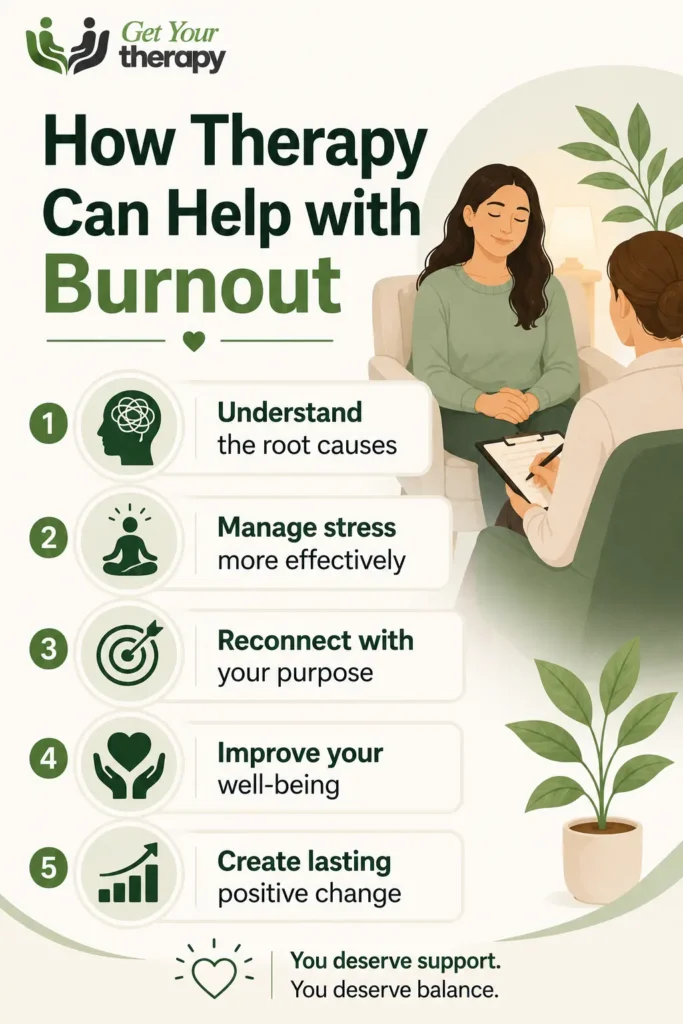
If you’re unsure where to begin, talking to a therapist can help you understand whether you’re experiencing workplace burnout, anxiety, depression, or a combination of these. If you’re considering professional support, our guide, How to Find the Right Therapist in India, explains what to look for before booking your first session.
When Should You Seek Help?
Feeling stressed during a busy week is normal. Feeling emotionally exhausted for months isn’t.
If your burnout symptoms are affecting your work, relationships, sleep, or overall quality of life, it’s worth speaking with a mental health professional. Burnout can overlap with anxiety and depression, making it difficult to understand what’s really happening without support.
Many people delay therapy because they assume they need to “push through” or wait until things become unbearable. In reality, seeking help early often makes recovery easier.
If this would be your first experience with therapy, you might find it helpful to read What to Expect in Your First Therapy Session before you book.
You Don’t Have to Wait Until You Break
Here’s something many people realise too late:
Burnout doesn’t always ask you to slow down. Sometimes it quietly convinces you that this is just what adulthood feels like.
It isn’t.
You deserve to feel engaged with your work, connected to the people around you, and able to rest without feeling guilty.
Ready to Feel Like Yourself Again?
Whether you’re dealing with workplace burnout, emotional exhaustion, or ongoing stress, speaking with the right therapist can help you understand what’s happening and create a realistic recovery plan.