

Yes. Online therapy for burnout is worth it for most people. Research shows that online therapy can be just as effective as in-person therapy for managing workplace burnout, chronic stress, anxiety, and emotional exhaustion. If work has left you feeling constantly drained, online therapy offers a flexible and evidence-based way to get support without adding more stress to your schedule.
Ironically, the people who need therapy the most are often the ones who say,
“I don’t even have time for therapy.”
That’s exactly why online therapy has become one of the most practical ways to begin burnout recovery.
Quick Answer
Online therapy for burnout helps you understand why you’re emotionally exhausted, identify unhealthy work patterns, build healthier boundaries, and recover from chronic workplace stress. For most people experiencing burnout, it’s just as effective as face-to-face therapy while being more convenient and accessible.
In 30 Seconds
Here’s what you need to know.
- ✔ Online therapy works for most burnout cases.
- ✔ CBT and ACT can both be delivered online.
- ✔ No travelling after work.
- ✔ More therapist choices.
- ✔ Greater privacy.
- ✔ Easier to fit into a busy schedule.
If burnout is making everyday life feel overwhelming, online therapy is often one of the easiest ways to get started.
Is Online Therapy Effective for Burnout?
Yes. Several studies have found that online Cognitive Behavioural Therapy (CBT) produces outcomes similar to face-to-face therapy for stress, anxiety, depression, and workplace burnout. What matters most isn’t whether you’re sitting in the same room as your therapist, it’s the quality of the therapeutic relationship and your willingness to engage with the process.
If you’ve been wondering whether online sessions are “real therapy,” the answer is simple.
They are. The conversation, strategies, and emotional support remain the same. The only thing that changes is the location.
Why Online Therapy Works So Well for Burnout?
Here’s something people rarely talk about.
The hardest part of burnout isn't finding an hour for therapy. It's finding the energy to leave the house after work.
When you’re emotionally exhausted, travelling across the city, sitting in traffic, and waiting for an appointment can feel like another task on an already impossible to-do list.
Online therapy removes those barriers.
You can attend a session from home, during your lunch break, or even before work begins. That convenience makes it much easier to stay consistent, and consistency is one of the biggest predictors of successful burnout recovery.
If you’re still unsure whether what you’re experiencing is actually burnout, our guide on Signs of Burnout at Work can help you recognise the early warning signs before deciding what kind of support you need.
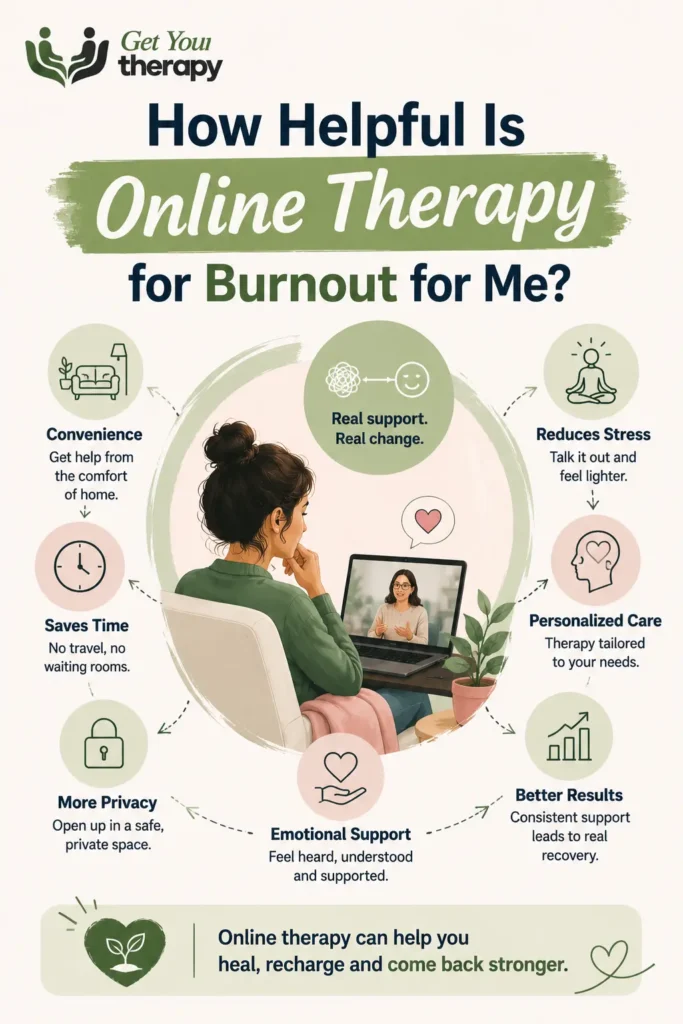
Online Therapy vs In-Person Therapy for Burnout
Both online and in-person therapy can be effective for burnout. The best choice depends on your lifestyle, comfort level, and the severity of your symptoms.
| Online Therapy | In-Person Therapy |
|---|---|
| Attend from anywhere | Face-to-face interaction |
| Saves travel time | Better for people who prefer in-person conversations |
| Flexible appointments | Useful for complex cases needing closer observation |
| Often easier to continue consistently | Limited to therapists near you |
For most professionals experiencing workplace burnout, online therapy is often the more practical option simply because it’s easier to fit into an already demanding schedule.
If you’re deciding between both formats, our guide on Online Therapy vs In-Person Therapy compares the benefits of each in more detail.
When Online Therapy May Not Be the Best Option?
Online therapy works well for most people experiencing burnout, but it isn’t the right solution for every situation.
If you’re experiencing suicidal thoughts, severe depression, a mental health crisis, or need immediate medical care, you should seek emergency support or in-person mental health services rather than relying only on online sessions.
Knowing when online therapy is enough and when additional support is needed is part of choosing the right care, not a sign that you’ve failed.
Common Myth
“Online therapy isn’t as effective as seeing someone in person.”
Research says otherwise.
For many people experiencing burnout, anxiety, or chronic stress, online therapy provides outcomes similar to face-to-face sessions. The biggest difference isn’t the screen.
It’s whether you feel comfortable enough to be honest with your therapist and continue attending sessions consistently.
Therapy Should Fit Your Life, Not Make It Harder
If you’re already emotionally exhausted, adding another commute, waiting room, and travel time may be the last thing you need.
The goal of online therapy for burnout isn’t to make recovery more complicated.
It’s to make asking for help easier.
If you’re wondering whether it’s time to seek professional support, reading Signs You Need Therapy for Burnout can help you decide. If this is your first experience with therapy, our guide on What to Expect in Your First Therapy Session explains exactly how a session usually works. Once you’ve started, learning How to Get the Most Out of Therapy can help you make meaningful progress from your very first appointment.
👉 Book an Online Therapist for Burnout
Sources
- World Health Organization (WHO): Burnout in ICD-11
- American Psychological Association (APA): Telepsychology Guidelines
- Journal of Medical Internet Research: Effectiveness of Internet-Based CBT
- Mayo Clinic: Job Burnout – Symptoms and Causes