
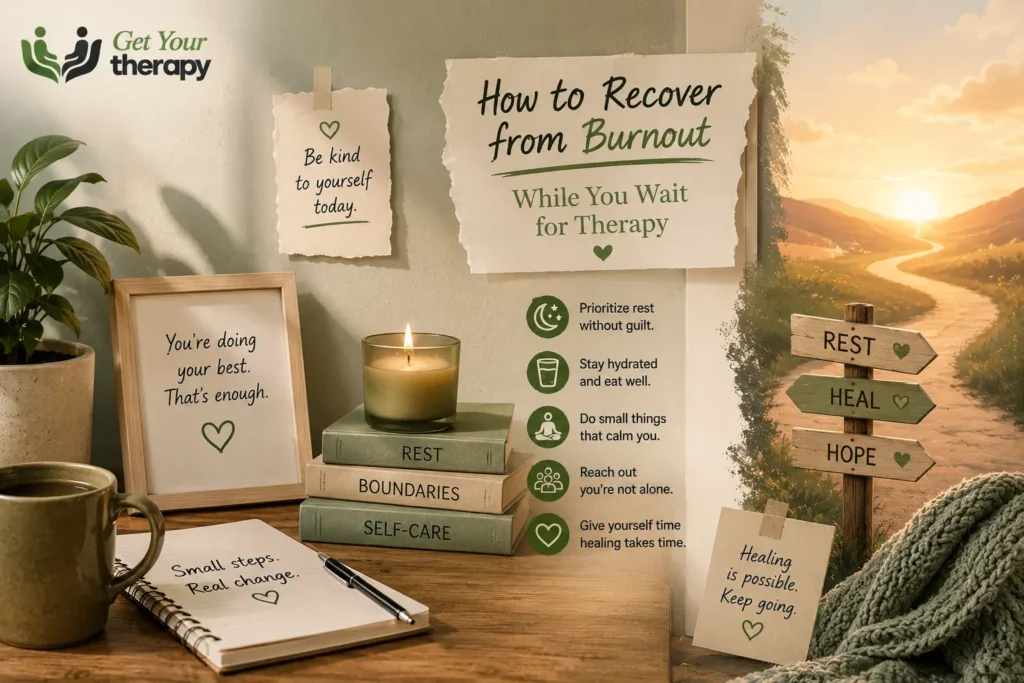
If you’re waiting for your first therapy appointment, you don’t have to wait to start your burnout recovery. While therapy is one of the most effective ways to recover from burnout, there are small, realistic steps you can take today to reduce emotional exhaustion and protect your mental health until you meet with a therapist.
One important thing to remember is this:
These steps are meant to support your recovery, not replace therapy.
Think of them as helping you stop things from getting worse while you wait for professional guidance.
Quick Answer
The best way to recover from burnout while waiting for therapy is to reduce unnecessary stress, prioritise sleep, set healthier boundaries, lower unrealistic expectations, and stay connected to supportive people. These actions won’t solve burnout overnight, but they can make recovery easier and help you feel more in control.
In 30 Seconds
✔ Stop trying to “push through.”
✔ Rest before you feel completely exhausted.
✔ Protect your energy, not just your time.
✔ Avoid making major life decisions.
✔ Keep your therapy appointment.
Recovery starts before your first therapy session.
7 Things You Can Do While Waiting for Therapy
1. Stop Treating Rest Like a Reward
Many people believe they need to finish everything before they deserve to rest. Burnout works the opposite way.
You don’t earn rest because you’re exhausted. You need rest so you don’t become exhausted.
Even small breaks during the day can help reduce the mental load you’re carrying.
2. Lower Your Expectations for a While
If you’re burned out, this isn’t the time to expect your best performance.
Permit yourself to do “good enough.”
Burnout recovery isn’t about becoming more productive. It’s about becoming well enough to enjoy your life again.
3. Protect One Hour That’s Only Yours
Choose one hour every day when work can’t reach you.
- No emails.
- No work chats.
- No checking notifications.
Read, walk, listen to music, stretch, or simply sit quietly. Your nervous system needs moments where it knows nothing is expected from you.
4. Don’t Make Big Career Decisions Yet
Many people experiencing burnout feel like quitting immediately.
Sometimes that’s the right decision. Sometimes it’s burnout making everything look impossible.
If you can, wait until you’ve had a chance to speak with a therapist before making a major career change. Gaining clarity is different from making decisions while emotionally exhausted.
If you’re unsure whether burnout is what you’re experiencing, our guide on Signs of Burnout at Work can help you recognise the difference between temporary stress and workplace burnout.
5. Stop Solving Everything Alone
Burnout often convinces you that asking for help means you’re not coping well enough.
The opposite is usually true.
Talk to someone you trust. It could be a friend, your partner, or a family member. You don’t need them to fix the problem; you simply need someone who can remind you that you’re not carrying it alone.
Isolation often makes burnout feel heavier than it already is.
6. Move Your Body Gently
When you’re burned out, you don’t need an intense workout.
You need movement that helps your body feel safe again.
A 20-minute walk, gentle stretching, yoga, or simply spending time outdoors can lower stress levels without adding another goal to achieve.
Recovery isn't about doing more. It's about asking less of yourself for a while.
7. Keep Your Therapy Appointment, Even If You Feel Slightly Better
Burnout doesn’t always improve in a straight line.
Some days you’ll feel more like yourself, and that’s encouraging. But feeling better for a few days doesn’t necessarily mean the burnout has gone away.
Many people cancel therapy because they think they’ve recovered, only to find themselves exhausted again a few weeks later.
Therapy helps you understand why burnout happened, so you’re less likely to repeat the same cycle.
If you’re wondering whether therapy is the right next step, our guide on Signs You Need Therapy for Burnout can help you decide. Once your appointment is booked, reading What to Expect in Your First Therapy Session and How to Get the Most Out of Therapy can help you feel more prepared and confident.
What Burnout Recovery Can’t Do?
- Self-care is important.
- Sleep is important.
- Exercise is important.
But none of them can fix an impossible workload, a toxic workplace, or years of ignoring your own limits.
Burnout recovery isn't about becoming strong enough to tolerate an unhealthy situation.
It’s about becoming healthy enough to recognise what needs to change.
That’s where therapy can make a lasting difference.
Maybe You Don’t Need to Push Harder
You may simply need permission to stop carrying everything by yourself.
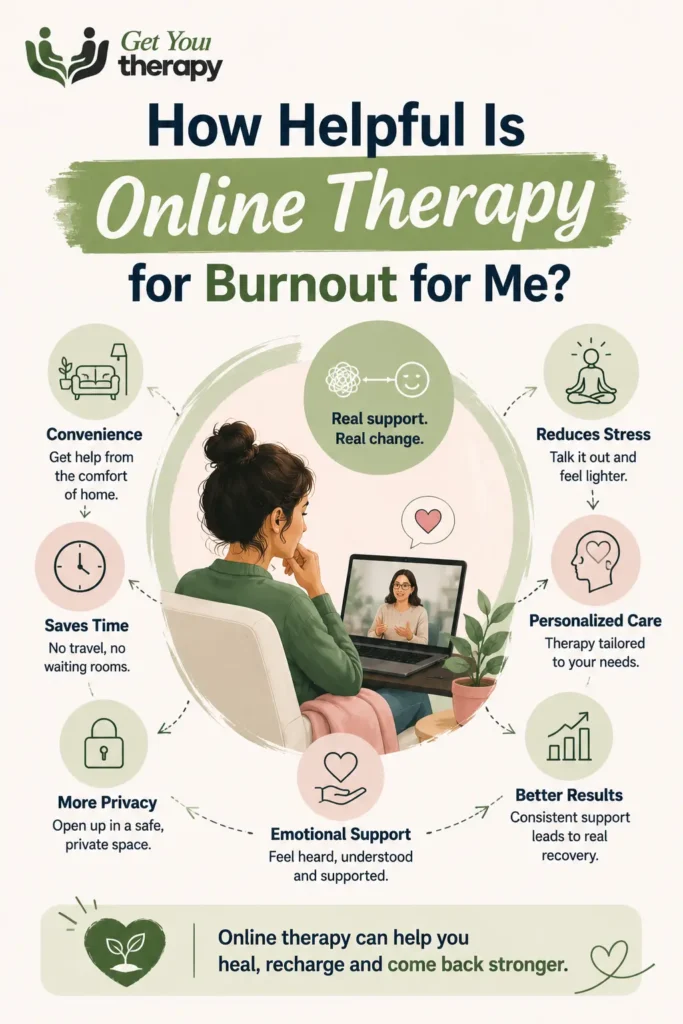
While these steps can support your burnout recovery, they aren’t a replacement for professional help. A therapist can help you understand what’s keeping you stuck and build a recovery plan that’s realistic for your life.
👉 Find the Right Therapist for Burnout
It begins the moment you decide that your well-being deserves the same attention you’ve been giving everything else.
Sources
- World Health Organization (WHO): Burnout in ICD-11
- American Psychological Association (APA): Understanding Burnout
- Mayo Clinic: Job Burnout – Symptoms and Causes
- National Institute for Health and Care Excellence (NICE): Mental Wellbeing at Work