
Have you ever spent half a therapy session explaining why your family situation is complicated?
- Why “just move out” isn’t realistic.
- Why your sexuality isn’t a phase.
- Being the first person in your family to pursue a different life path comes with guilt, pressure, and expectations.
If so, you may not need a better therapist. You may need a therapist who better understands your culture, identity, and lived experience.
Finding a culturally competent therapist in India isn’t about finding someone exactly like you. It’s about finding someone who understands the context behind your experiences so you can spend less time explaining your reality and more time working through it.
Quick Answer: What Is a Culturally Competent Therapist?
A culturally competent therapist understands how factors such as family expectations, religion, language, caste, sexuality, migration, community, and social identity influence mental health.
Instead of treating these factors as side notes, they recognise them as important parts of your life and incorporate them into therapy.
A culturally competent therapist doesn’t assume your experience. They understand the context behind it.
Why Cultural Competence Matters in Therapy?
A therapist can be highly qualified and still be the wrong fit. That’s an uncomfortable truth many people discover after several sessions.
For example:
- Advice that works in Western family systems may not work in Indian joint families.
- Relationship advice may overlook religious or community expectations.
- LGBTQ+ clients may feel misunderstood by therapists without affirmative training.
- NRIs may struggle to explain cultural conflicts between home and abroad.
When a therapist doesn’t understand your context, therapy can feel frustrating. When they do, progress often happens faster because you’re working on the issue rather than constantly explaining it.
Signs You Need a Therapist Who Understands Your Background
You may benefit from a culturally aware therapist if:
You’re LGBTQ+ and Want an Affirming Therapist
You shouldn’t have to educate your therapist about your identity.
A queer-affirmative therapist understands concepts such as minority stress, coming out, family acceptance, gender identity, and relationship challenges without treating your identity as the problem.
Your Family Expectations Affect Your Mental Health
Many mental health struggles in India are deeply connected to family systems.
- Career choices.
- Marriage pressure.
- Financial obligations.
- Living arrangements.
A therapist who understands Indian family dynamics can help you navigate these realities rather than offering advice that feels disconnected from your life.
You’re Navigating Caste, Community, or Religious Identity
Experiences related to caste, discrimination, belonging, community expectations, or faith can have a significant impact on mental health.
A therapist who understands these factors is often better equipped to support you.
You’re an NRI or Living Between Two Cultures
Many NRIs and immigrants experience a unique form of identity conflict.
One set of expectations at home. Another outside it. A therapist familiar with multicultural experiences can help you navigate both.
How to Know if a Therapist Understands Your Culture
The simplest answer?
Ask.
Many people worry they’ll offend a therapist by asking about their experience.
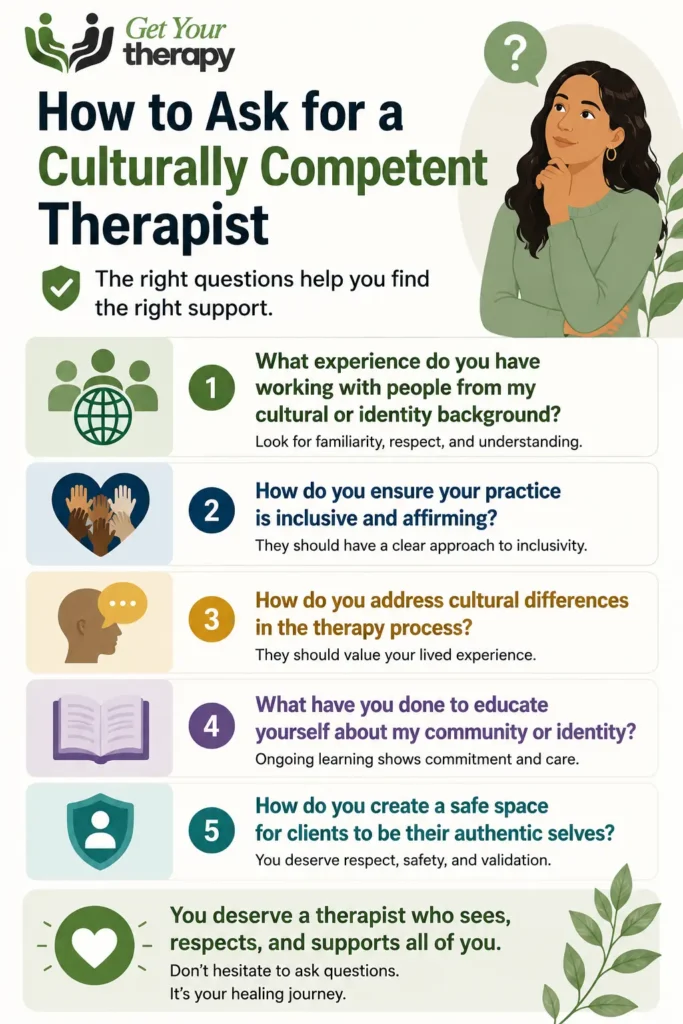
You won’t. Before booking, consider asking:
- Have you worked with clients from my background before?
- Do you have experience supporting LGBTQ+ clients?
- How do you approach family-related concerns in Indian households?
- Have you worked with people navigating cultural identity issues?
Specific answers are usually a good sign. Vague answers like “I work with everyone” tell you very little.
If you’re unsure what else to ask, read our guide on Questions to Ask a Therapist Before You Book.
Green Flags to Look For
A culturally competent therapist often:
- Mentions specific communities they work with.
- List affirmative or identity-related training.
- Offers sessions in your preferred language.
- Demonstrates curiosity without making you educate them.
- Understands cultural nuances without stereotyping.
The goal isn’t perfection, it’s feeling understood.
Red Flags to Watch Out For
Consider looking elsewhere if a therapist:
- Dismisses important parts of your identity.
- Assumes your culture is the cause of every problem.
- Suggests changing your sexual orientation or gender identity.
- Makes you repeatedly explain basic aspects of your lived experience.
- Offers generic advice that ignores your circumstances.
For more warning signs, read 7 Red Flags Your Therapist Is Not the Right Fit.
Can Online Therapy Help You Find a Better Match?
Absolutely. One of the biggest advantages of online therapy is access.
Instead of choosing from a handful of therapists in your city, you can work with professionals across India.
This is particularly helpful if you’re looking for:
- A queer-affirmative therapist
- A therapist who speaks your language
- Someone familiar with NRI experiences
- A therapist experienced with cultural identity concerns
Learn more in our guide to Online Therapy vs In-Person Therapy.
Where to Find a Culturally Competent Therapist in India?
Some trusted resources include:
GetYourTherapy
Browse therapists by language, speciality, availability, and areas of experience to find someone who understands your concerns before you book.
The Mind Clan
An Indian directory known for helping people find queer-affirmative and inclusive mental health professionals.
iCALL by TISS
A mental health helpline and counselling service that supports individuals across India.
Sangath
A leading mental health organisation focused on accessible and culturally relevant care.
You Don’t Need a Therapist Who Is Exactly Like You
Many people assume they need a therapist who shares their identity.
Not necessarily.
A therapist doesn’t need to be queer to support LGBTQ+ clients. They don’t need to be an NRI to understand migration stress. They don’t need to share your religion to understand its importance.
What matters most is their willingness, training, and ability to understand your lived experience without dismissing it.
You Shouldn’t Have to Spend Therapy Explaining Your Reality
The right therapist doesn’t need to share every part of your identity. But they should understand the context behind your experiences.
That understanding often makes therapy feel safer, more effective, and more meaningful.
Ready to Find a Therapist Who Gets It?
At GetYourTherapy, you can explore therapists based on language, concerns, cultural experience, and availability to find someone who feels like the right fit.
👉 Find a Therapist Who Understands Your Background