

Anxiety is the most common reason people seek therapy in India. But finding a therapist for anxiety is not the same as finding any therapist. Not every psychologist specialises in anxiety treatment, and not every therapy approach works equally well for it.
This guide tells you exactly what to look for, which questions to ask, and how to find the right therapist for anxiety in India without wasting sessions on the wrong fit.
First: Know Which Type of Anxiety You Are Dealing With
Anxiety is not one thing. The type you are experiencing changes, which therapist and which treatment approach you need.
Generalised Anxiety Disorder (GAD): Persistent, free-floating worry about multiple things – work, family, health, money – that you cannot switch off. Very common in India among working professionals and students.
Social Anxiety: Fear of judgment, embarrassment, or humiliation in social situations. Often misread as introversion or shyness. More debilitating than it looks from the outside.
Panic Disorder: Sudden, intense panic attacks – racing heart, breathlessness, feeling of losing control – that come without warning and often lead to avoiding situations where they might happen again.
Health Anxiety: Persistent fear of having a serious illness despite medical reassurance. Worsened significantly post-COVID in India.
Performance and Exam Anxiety: Specific to high-stakes situations – competitive exams like UPSC, JEE, NEET, CA, or workplace performance reviews. India has one of the highest rates of exam-related anxiety in the world. A therapist who understands this context is worth specifically seeking out.
OCD (Obsessive Compulsive Disorder): Recurring intrusive thoughts paired with compulsive behaviours to manage them. Often misdiagnosed as general anxiety, and needs a therapist trained in ERP specifically.
Knowing which type you are dealing with helps you ask the right questions when screening therapists.
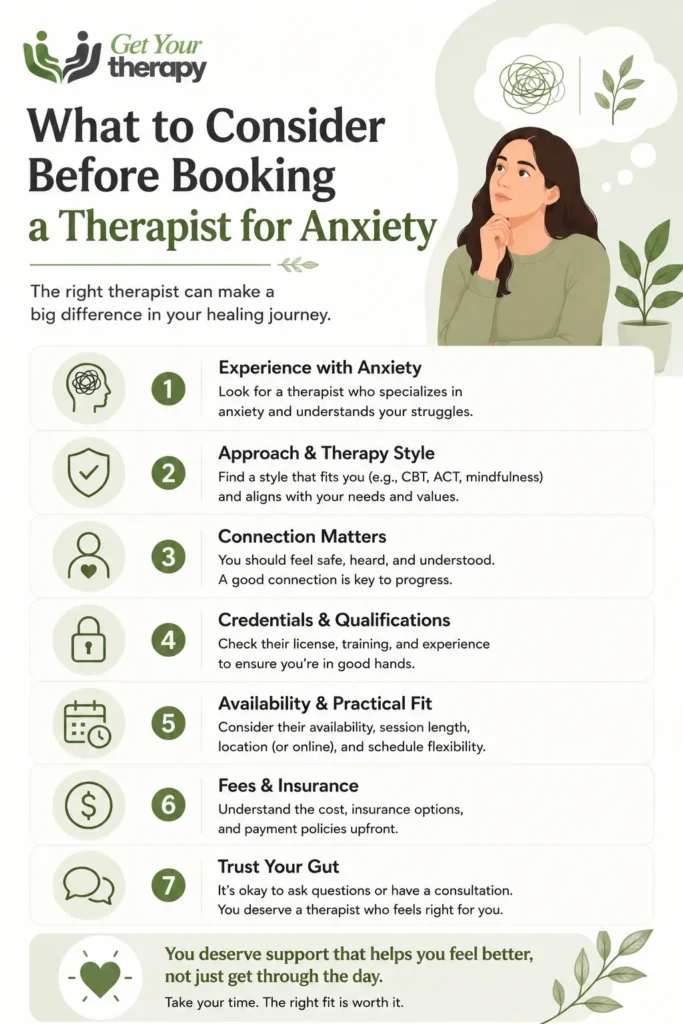
Which Therapy Works Best for Anxiety
Not all therapy approaches are equally effective for anxiety. The research is detailed on this.
- Cognitive Behavioural Therapy (CBT) is the most evidence-based treatment for anxiety disorders. It works by identifying the thoughts that drive anxious responses and systematically changing them. CBT for anxiety typically runs 8 to 12 structured sessions with between-session exercises. It is effective for GAD, social anxiety, panic disorder, health anxiety, and performance anxiety.
- Exposure and Response Prevention (ERP) is the gold-standard treatment specifically for OCD. It involves gradually facing feared thoughts or situations without performing the compulsive response. If you have OCD, you need a therapist trained in ERP – general CBT is not enough.
- Acceptance and Commitment Therapy (ACT) works by changing your relationship with anxious thoughts rather than eliminating them. Effective for GAD and health anxiety, especially for people who have tried CBT and found it too structured.
- Mindfulness-Based Cognitive Therapy (MBCT) is most effective for preventing relapse in people who have had recurring episodes of anxiety and depression. Less suitable as a first-line treatment for acute anxiety.
When you speak to a potential therapist, ask directly: “What approach do you use for anxiety, and how many sessions does it typically take?” A trained anxiety therapist will give you a specific, structured answer.
What to Look For in an Anxiety Therapist in India
RCI registration or an M.Phil in Clinical Psychology. This is the minimum qualification standard for a clinical psychologist in India under the Rehabilitation Council of India Act. A general MA in Psychology or a wellness certification is not the same. Ask for the RCI number directly.
Specific experience with your type of anxiety. A therapist who lists anxiety as one of 15 concerns they treat is different from one who has worked with 50 clients specifically managing panic disorder or exam anxiety. Ask how many clients they have worked with for your specific concern.
CBT training from a recognised body. In India, look for CBT certification from the Beck Institute, the British Association for Behavioural and Cognitive Psychotherapies (BABCP), or an RCI-recognised university programme. For OCD specifically, training in ERP from a recognised body matters.
Comfort with your cultural context. Indian anxiety often has specific shapes that a culturally unaware therapist may handle poorly – parental pressure around career and marriage, joint family stress, financial anxiety tied to family obligations, and fear of bringing shame. A therapist who understands these dynamics without judgment is a genuine clinical asset, not just a nice-to-have.
Willingness to track progress. A good anxiety therapist uses outcome measures – brief questionnaires at the start and periodically through treatment to track symptom levels. The GAD-7 is the standard validated tool for generalised anxiety. Ask if they use any structured outcome tracking.
Where to Find an Anxiety Therapist in India?
GetYourTherapy – filter by anxiety, RCI registration, language, and budget. Available for online and in-person sessions across India.
RCI’s national register at rehabcouncil – searchable database of registered clinical psychologists. Confirms credentials directly.
NIMHANS, Bengaluru – India’s premier mental health institution. Outpatient anxiety treatment available. Long waitlists but highly trained specialists.
iCall at TISS Mumbai – For short-term counselling. Supervised by experienced clinical psychologists. Good starting point if cost is a barrier.
Your GP or physician can make a referral to a psychiatrist or clinical psychologist, particularly if you want a formal diagnosis alongside therapy.
Questions to Ask Before Booking an Anxiety Therapist?
Before committing to any therapist for anxiety, ask these three questions in your first consultation:
“What approach do you use for anxiety, and can you walk me through how it works?” A trained therapist will explain CBT, ACT, or ERP clearly without jargon.
“How many clients have you worked with specifically for this type of anxiety?” Experience with your specific presentation matters more than general anxiety experience.
“How will we measure whether the therapy is working?” If they cannot answer this, they are not tracking outcomes. That is a problem.
Questions to Ask a Therapist Before You Book
How Many Sessions Does Anxiety Therapy Take?
For most anxiety disorders treated with CBT, meaningful improvement is visible within 8 to 12 sessions. Research from NIMHANS and international studies consistently shows this range for GAD, social anxiety, and panic disorder.
OCD with ERP typically takes 12 to 20 sessions, depending on severity.
Anxiety that is tied to deeper trauma or long-standing personality patterns may take longer. Your therapist should give you a rough timeline after the first two sessions once they have a clear picture of your situation.
Ready to find an anxiety therapist in India?
At GetYourTherapy, you can search for RCI-registered psychologists who specialise in anxiety – filtered by treatment approach, language, budget, and availability.
Find a therapist for anxiety in India
Also read: