

Most people think therapy works because they have found a great therapist.
That’s only half true.
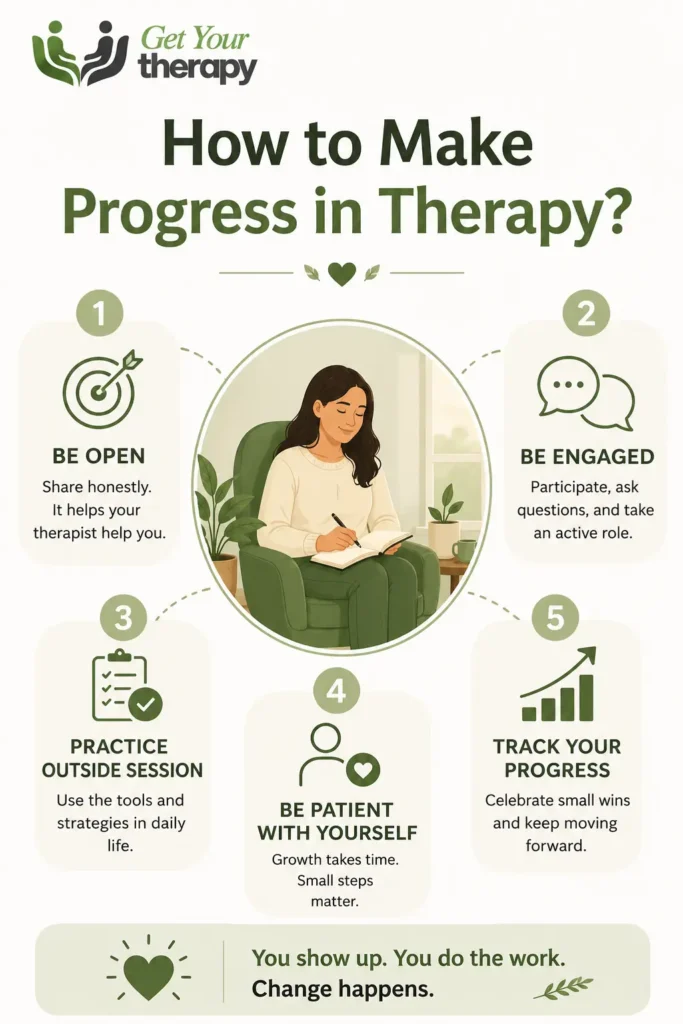
A great therapist can guide the process, but therapy works best when you actively participate in it. The clients who make the fastest progress are not necessarily the most self-aware or emotionally intelligent. They’re usually the ones who show up honestly, stay curious, and do some of the work between sessions.
If you’re wondering how to get the most out of therapy, these are the tips that actually make a difference.
Quick Answer: How Do You Get the Most Out of Therapy?
To get the most out of therapy, be honest with your therapist, bring specific issues to each session, speak up when something isn’t helping, and apply what you learn between appointments. Therapy works best when it becomes something you actively engage with rather than something that simply happens to you.
1. Stop Waiting for Your Therapist to Read Your Mind
One of the biggest therapy mistakes is assuming your therapist will automatically figure out what’s wrong.
They won’t.
Therapists are skilled guides, not mind readers. If something important happened during the week, bring it up. If you’re struggling with something specific, say it directly.
The more clearly you communicate, the more useful therapy becomes.
A simple sentence like:
“There’s something I really need to talk about today.” can completely change the direction of a session.
If you’re still looking for a therapist who matches your needs and communication style, read our guide, “How to Find the Right Therapist in India.”
2. Bring One Real Problem to Every Session
Many people spend most of their therapy talking about their week. That’s not always bad, but it can keep you stuck. Before your session, ask yourself:
“What’s the biggest thing affecting me right now?”
Maybe it’s:
- A difficult conversation
- Constant overthinking
- Relationship conflict
- Work stress
- Anxiety about the future
Start there. The sooner you get to the real issue, the more value you’ll get from your session.
Not sure what happens once therapy begins? Our guide, “What to Expect in Your First Therapy Session,” can help you feel more prepared.
3. Say the Thing You’re Avoiding
Here’s something many therapists will quietly tell you:
The thing you’re most reluctant to discuss is often the thing worth discussing.
Shame, guilt, jealousy, resentment, insecurity, fear: these are the topics people often edit out. You don’t have to share everything immediately.
But if you’ve been avoiding the same topic for several sessions, it’s probably worth exploring. Growth often starts where comfort ends.
At GetYourTherapy, you can browse qualified therapists based on language, budget, speciality, and availability. Find the Right Therapist Today
4. Don’t Turn Therapy Into a Weekly Vent Session
This is advice most people never hear. Talking about your feelings can feel relieving.
But relief isn’t always the same as progress. If every session ends with:
“I feel better now.”
But if nothing changes between sessions, therapy can become emotional maintenance rather than meaningful growth. A helpful question to ask at the end of a session is:
“What should I pay attention to this week?”
That keeps therapy moving forward.
5. Tell Your Therapist When Something Isn’t Working
Many people stay silent when they disagree with their therapist. Then they stop booking sessions.
Instead, say it. You can tell your therapist:
- “I’m not sure that fits my situation.”
- “I don’t think that approach is helping.”
- “I feel like we’re going in circles.”
Good therapists welcome feedback. In fact, these conversations often lead to some of the most productive breakthroughs in therapy.
Sometimes the issue isn’t the therapy itself but the therapist-client fit. Learn the warning signs in 7 Red Flags Your Therapist Is Not the Right Fit.
6. Judge Progress by Your Life, Not Your Feelings
One reason people quit therapy too early is that they’re waiting for a dramatic breakthrough. Most progress doesn’t look dramatic.
It usually looks like:
- Recovering faster after a bad day
- Setting a boundary you couldn’t set before
- Sleeping better
- Feeling less anxious in situations that used to overwhelm you
- Catching unhealthy patterns sooner
These changes can feel small in the moment. Over time, they’re often life-changing.
7. Do Something Between Sessions
If there’s one tip that consistently helps people get the most out of therapy, it’s this:
Don’t stop the work when the session ends. You don’t need an hour of journaling every day.
Five or ten minutes is enough.
Try:
- Writing down recurring thoughts
- Noticing emotional triggers
- Practising a coping skill
- Reflecting on a difficult interaction
Therapy is often less about what happens during the session and more about what happens between them.
Signs Therapy Is Actually Working
Many people ask:
“How do I know if therapy is helping?”
Look for these signs:
- You understand your patterns better.
- You react less intensely to stress.
- Your relationships feel healthier.
- You recover faster from setbacks.
- You’re making decisions with more confidence.
- You need less reassurance from others.
Progress isn’t always obvious week to week. Sometimes you only notice it when you look back.
Many therapists encourage clients to track patterns, emotions, triggers, and insights between sessions. A dedicated therapy journal can make it easier to remember what you want to discuss and notice progress over time.Therapy Works Best When You Don’t Have to Figure It Out Alone
You don’t need the perfect words, a perfect plan, or a perfect understanding of what you’re feeling before you start.
You simply need a place to begin.
👉 Book a Therapist Who Matches Your NeedsFinal Thoughts
The people who get the most out of therapy aren’t the ones with the perfect therapist. They’re the ones who show up honestly, ask difficult questions, and stay engaged between sessions.
You don’t need to do therapy perfectly. You just need to participate in it.
That’s where change usually begins.