

Anxiety medication can help when anxiety is persistent, severe, or interfering with daily life, but not everyone with anxiety needs medicine. In India, antidepressants such as SSRIs are commonly used for longer-term anxiety treatment, while some faster-acting medicines are used only for short periods because they can cause dependence. The right choice depends on the type of anxiety, other health conditions, and your individual response.
Medication should be prescribed and reviewed by a qualified medical professional rather than started on your own.
What Medicines Are Used for Anxiety in India?
The word antidepressant can be confusing when you are seeking treatment for anxiety. Several antidepressants also work for anxiety disorders.
| Type | How it is generally used |
|---|---|
| SSRIs | Common longer-term treatment for anxiety |
| SNRIs | Another longer-term option for some people |
| Benzodiazepines | Short-term relief in selected situations |
| Other medicines | May be considered when first options do not work or are not suitable |
India’s ICMR anxiety-treatment workflow includes SSRIs such as escitalopram, sertraline, fluoxetine, paroxetine, and fluvoxamine, while other options may be considered by specialists when necessary.
This does not mean one of these medicines is automatically right for you. The diagnosis matters: treatment for generalized anxiety may differ from treatment for panic disorder, social anxiety, or OCD.
Read Types of Anxiety Disorders: GAD, Social Anxiety, Panic, and OCD Explained if you are still trying to understand your anxiety pattern.
Do You Need Medication for Anxiety?
Not necessarily.
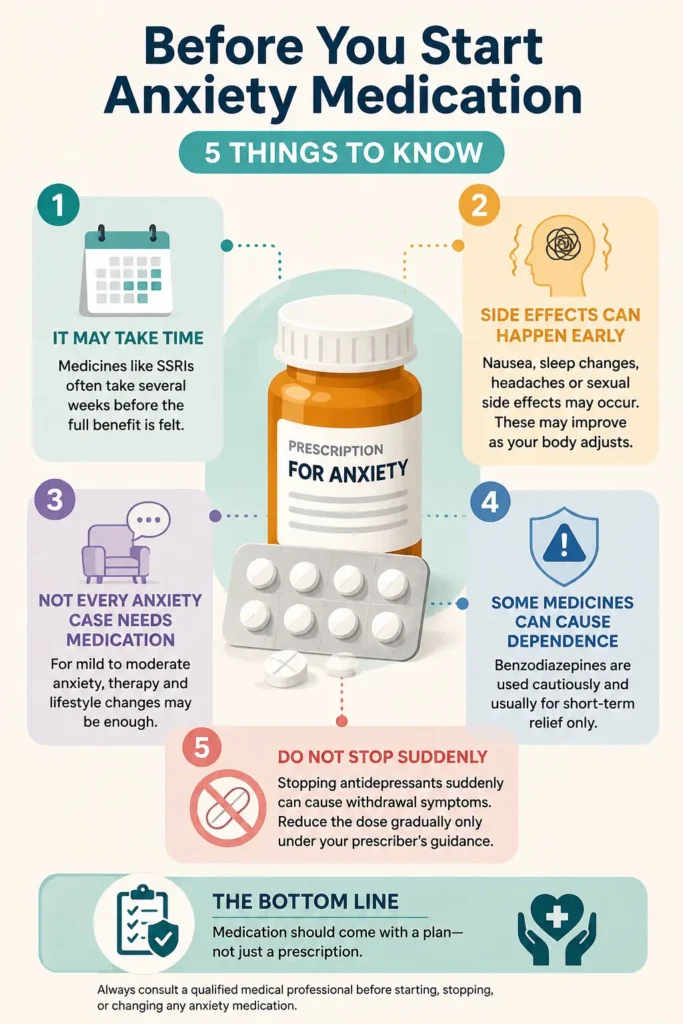
ICMR guidance specifically notes that milder anxiety may not require medication. Psychological support, psychoeducation, and therapy may be enough for some people.
Medication may be discussed when:
- Anxiety is significantly affecting work, studies, or relationships
- Panic attacks are frequent
- Symptoms have continued despite other support
- Anxiety is making everyday functioning difficult
- Therapy alone has not provided enough improvement
WHO recommends CBT-based psychological treatments for anxiety and also identifies SSRIs as an option for adults with generalized anxiety disorder or panic disorder.
So this is rarely a simple therapy vs. medication decision. Some people use therapy alone, some use medication alone, and others benefit from both.
How Long Does Anxiety Medication Take to Work?
This is one of the most important things to know before starting.
SSRIs do not usually provide instant relief.
Antidepressants commonly take several weeks to show their full effect. NIMH notes that these medicines typically take 4–8 weeks to take effect, although your experience may vary.
That means feeling anxious after the first few tablets does not automatically mean the medicine has failed.
Your prescriber should tell you:
- When improvement might begin
- Which early side effects to watch for
- When should your next review happen
- What to do if you feel worse
What Side Effects Can Anxiety Medication Cause?
Side effects vary by medicine and by person.
With SSRIs and similar antidepressants, possible effects can include:
- Nausea or stomach upset
- Headache
- Sleepiness or sleep changes
- Sexual side effects
- Changes in appetite or weight
Some side effects improve as your body adjusts, while others may need a change in treatment. ICMR recommends monitoring issues such as sedation, sexual dysfunction, and weight changes during treatment.
Do not change the dose yourself because of a side effect. Contact the prescribing doctor instead.
Are Anxiety Medicines Addictive?
This needs a more nuanced answer than a simple yes or no.
SSRIs
SSRIs are not generally treated as addictive drugs in the same way as benzodiazepines. However, stopping antidepressants suddenly can cause withdrawal or discontinuation symptoms, so they should normally be reduced gradually with professional guidance.
Benzodiazepines
Medicines in this group can provide faster relief from severe anxiety, but regular or prolonged use can lead to tolerance and dependence.
WHO generally does not recommend benzodiazepines as long-term treatment for anxiety because of their dependence risk, and India’s ICMR workflow similarly advises against long-term use.
If you have been taking one regularly, do not suddenly stop it without speaking to your doctor.
What Should You Tell Your Doctor Before Starting?
Do not treat the consultation as merely a means to collect a prescription.
Tell your doctor about:
- other medicines you take
- vitamins or supplements
- previous medication reactions
- alcohol or substance use
- pregnancy or plans for pregnancy
- other physical or mental-health conditions
Medication interactions and your medical history can influence which treatment is safest. NIMH recommends discussing all medications, supplements, allergies, and prior medication problems before beginning treatment.
Also ask:
“Why are you recommending this particular medicine for my type of anxiety?”
You should understand what you are taking and why.
Should You See a Psychiatrist or a Therapist?
If you want to discuss medication, see a psychiatrist or another qualified medical doctor who can assess and prescribe treatment. India’s national mental-health guidelines separate medication prescribing by medical officers and psychiatrists from psychological interventions provided by mental-health professionals.
A therapist or psychologist can help with the patterns that medication does not directly change, for example:
- fear of uncertainty
- avoidance
- reassurance-seeking
- catastrophic thinking
- fear of panic sensations
This is why medication and therapy are sometimes used together.
Read CBT for Anxiety: How It Works and What to Expect in India if you are considering therapy alongside medication.
Can You Stop Anxiety Medication Once You Feel Better?
Maybe, but not suddenly and not without discussing it with your prescriber.
Feeling better can mean the treatment is working, rather than that it is no longer needed. How long medication continues depends on your diagnosis, response, previous episodes, and risk of symptoms returning.
NICE recommends reducing antidepressants in stages rather than abruptly stopping them because gradual tapering helps reduce withdrawal symptoms.
There is no universal timeline that applies to everyone.
Questions to Ask Before You Start Anxiety Medication
Before leaving the appointment, get clear answers to:
- What medicine am I taking and why?
- How long should it take to work?
- What side effects should I expect?
- What should make me contact you sooner?
- How and when will we review whether it is helping?
- Should I also consider therapy?
- What happens when it is eventually time to stop?
That conversation is more useful than trying to compare anxiety tablets yourself online.
The Bottom Line
Starting anxiety medication should not feel like being handed a tablet and told to come back later.
You should know why it was prescribed, when it may start helping, what side effects to expect, and how it will eventually be reviewed or stopped.
And medication is only one part of anxiety treatment. If anxious thoughts, avoidance, or fear are continuing to control your life, therapy can help you work on the patterns underneath them.
Explore Anxiety: What It Is, Why It Happens, and How to Get Help in India, or find a therapist for anxiety in India.