
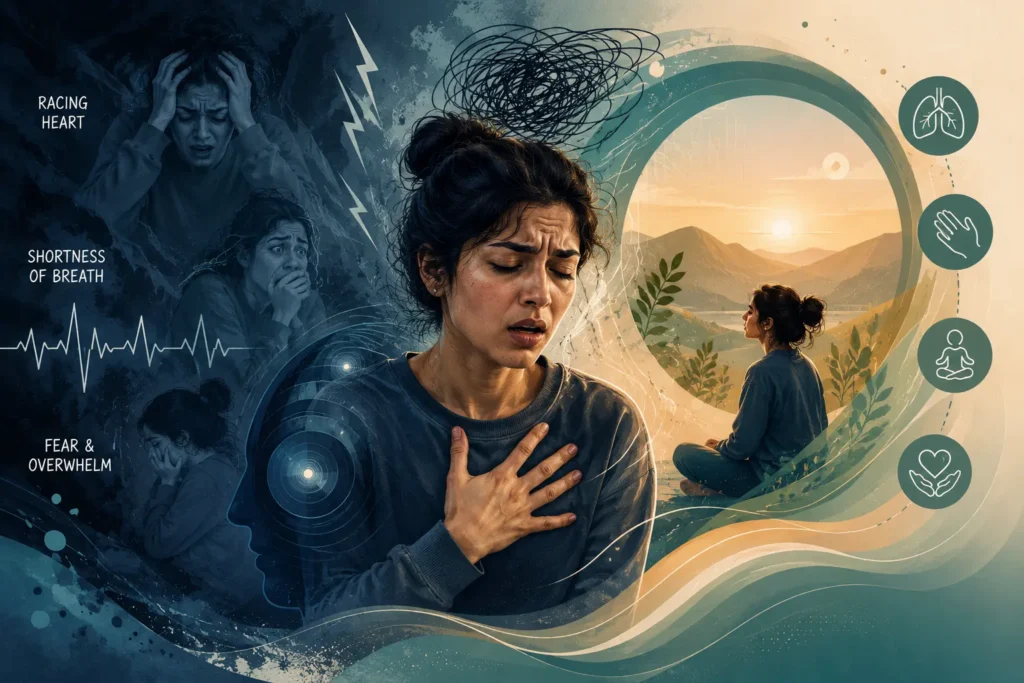
A panic attack is a sudden wave of intense fear that causes real physical symptoms, including a racing heartbeat, chest tightness, breathlessness, shaking and dizziness. It happens when your body’s emergency alarm switches on even though you may not be in immediate danger.
Most panic attacks pass with time. However, new or unexplained chest pain and breathing difficulty should be medically assessed rather than assumed to be anxiety.
What Are the Symptoms of a Panic Attack?
A panic attack can begin quickly, sometimes without an obvious trigger.
Common panic attack symptoms include:
| Physical symptoms | Thoughts and feelings |
|---|---|
| Racing or pounding heart | Sudden intense fear |
| Chest pain or tightness | Fear of dying |
| Shortness of breath | Feeling out of control |
| Sweating or shaking | A sense that something terrible is happening |
| Dizziness or weakness | Feeling detached from yourself |
| Tingling or numbness | Feeling that your surroundings are unreal |
| Nausea or stomach discomfort | Fear of another attack |
The strongest symptoms may settle within minutes, although an attack can last longer and leave you feeling tired or unsettled afterwards.
What Happens to Your Body During a Panic Attack?
Your body activates its fight-or-flight response, the same system designed to protect you during danger.
Your heart beats faster to move blood towards your muscles. Your breathing becomes quicker, your muscles tighten, and your attention focuses strongly on possible danger.
The sensations can then create a cycle:
You notice your heartbeat → think something is seriously wrong → feel more frightened → your heartbeat becomes stronger.
NIMH describes panic attacks as possible “false alarms” in which normal survival responses activate too strongly or too often.
The symptoms are not imaginary. The alarm is real, even when there is no immediate threat.
What Should You Do During a Panic Attack?
1. Stay somewhere safe
Sit down or remain where you are when possible. When you immediately escape every situation, your mind may begin believing that leaving was the only reason you stayed safe.
Move first if you are driving, near traffic or in another unsafe location.
2. Slow your breathing
Avoid repeatedly taking large, fast breaths.
Breathe in gently through your nose and allow the exhale to be slightly longer:
- Breathe in for four counts.
- Breathe out for six counts.
- Repeat without forcing or holding your breath.
The exact counting is less important than making your breathing slower and more comfortable.
3. Name what is happening
Tell yourself:
“This is a panic response. It feels frightening, but it will pass.”
You do not have to convince yourself that you feel calm. You are giving your mind a more accurate explanation for the symptoms.
4. Focus on your surroundings
Move your attention away from repeatedly checking your heartbeat or breathing.
Notice:
- Five things you can see
- Four things you can physically feel
- Three things you can hear
Grounding may not stop the attack instantly, but it can help you remain connected to the present moment.
5. Let the sensations settle
Fighting every symptom can create another fear: “Why is this not stopping?”
Try to allow the sensations to rise and fall while reminding yourself that your body cannot remain at peak panic indefinitely. NHS guidance similarly recommends remaining where you are when possible, breathing slowly and remembering that the attack will pass.
Is It a Panic Attack or a Heart Problem?
Panic attacks can resemble medical emergencies because both may involve chest pain, breathlessness, sweating, nausea and a rapid heartbeat.
Indian clinical guidance recommends checking for physical conditions that can resemble panic disorder, including heart-rhythm and thyroid problems. This is especially important during a first or unfamiliar episode.
Seek urgent medical care if:
- This is your first episode of severe chest pain.
- The pain feels crushing, squeezing or unusually intense.
- Pain spreads to your arm, jaw, neck or back.
- You faint or become unresponsive.
- You have severe difficulty breathing.
- The symptoms feel different from previously assessed panic attacks.
- You are uncertain whether anxiety is the cause.
In an emergency in India, call 112 or go to the nearest emergency department. India’s official health guidance identifies 112 as the national emergency number.
Does One Panic Attack Mean You Have Panic Disorder?
No. A person can have one panic attack without having panic disorder.
Panic disorder involves repeated, unexpected panic attacks followed by ongoing fear of another attack or changes in behaviour. For example, someone may stop using the metro, travelling alone or exercising because these situations remind them of previous panic symptoms.
Read Types of Anxiety Disorders Explained to understand how panic disorder differs from other anxiety conditions.
When Can Therapy Help?
Consider speaking with a therapist if:
- Panic attacks happen repeatedly.
- You constantly worry about the next one.
- You avoid places or activities because of panic.
- Normal body sensations regularly feel dangerous.
- Panic is affecting travel, work, sleep or relationships.
Cognitive Behavioural Therapy can help you understand the panic cycle, respond differently to physical sensations and gradually return to situations you have been avoiding. CBT is included among the main treatments for panic disorder in official clinical guidance.
For more support, read Anxiety: What It Is, Why It Happens and How to Get Help in India or How to Find a Therapist for Anxiety.
The Bottom Line
A panic attack happens when your body reacts as though you are in danger. The symptoms feel powerful, but they usually pass.
Learn how to respond to familiar attacks, but never dismiss new chest pain or severe breathing problems. Once medical causes have been checked, therapy can help prevent panic from controlling your routine.
Find a therapist for panic attacks and anxiety
Sources
- National Institute of Mental Health — Panic Disorder: What You Need to Know
- Indian Psychiatric Society — Clinical Practice Guidelines for Anxiety and Panic Disorders in Emergency Settings
- Indian Council of Medical Research — Standard Treatment Workflow for Anxiety Disorders
- Ministry of Home Affairs, Government of India — Emergency Response Support System 112