

Some weeks at work are simply hard.
A big project lands on your desk, deadlines overlap, your inbox never stops growing, and you tell yourself, “Things will calm down next week.”
But what if next week feels exactly the same?
And the week after that?
If you’ve started feeling exhausted before your workday even begins, you’re constantly counting down to the weekend, and even time off doesn’t leave you refreshed, you may be experiencing more than everyday stress. These are often the early signs of burnout at work, and recognising them early can make recovery much easier.
According to an Indeed India workplace survey, more than 70% of Indian employees have experienced burnout in their current role. As workloads increase and work-life boundaries continue to blur, workplace burnout has become one of the most common mental health challenges professionals face today.
Quick Answer
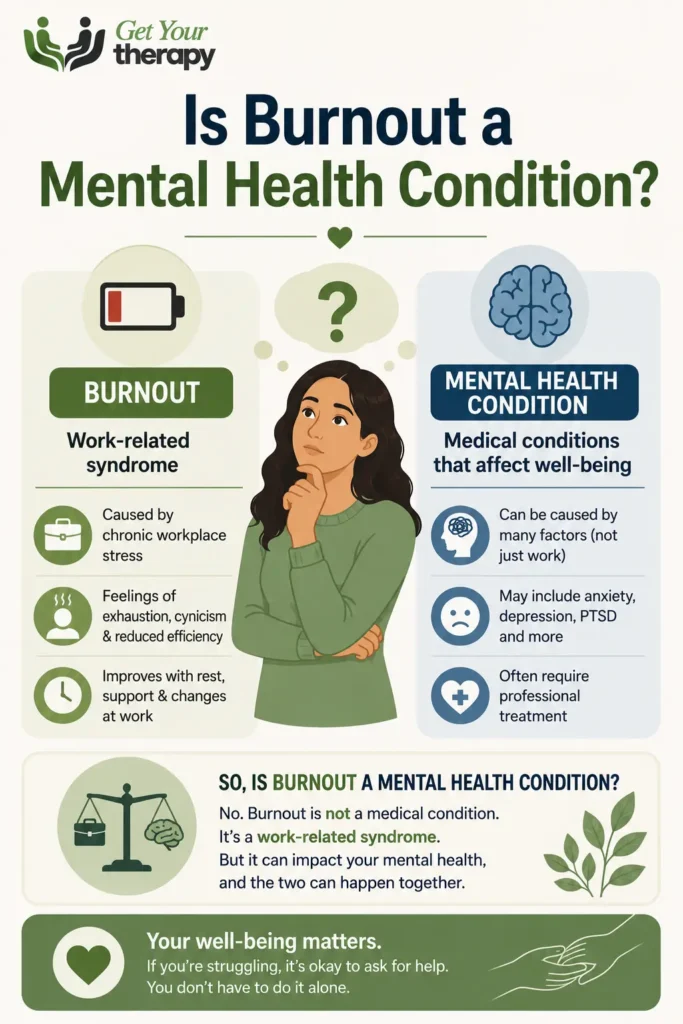
The most common signs of burnout at work include constant exhaustion, losing motivation, feeling emotionally detached from your job, struggling to concentrate, becoming increasingly cynical, and feeling drained even after weekends or holidays. Unlike temporary work stress, burnout doesn’t disappear after a good night’s sleep or a few days off. It develops gradually when chronic workplace stress continues for too long without enough recovery.
In 30 Seconds
If you’re wondering, “Am I burned out at work?”, here’s a quick self-check:
- ✔ You’re tired before work even starts.
- ✔ Weekends no longer recharge you.
- ✔ Work you once enjoyed now feels meaningless.
- ✔ Small tasks suddenly feel overwhelming.
- ✔ You’re becoming emotionally numb or irritable.
- ✔ You’ve thought about quitting—not because of one bad day, but because you simply can’t keep going like this.
If several of these feel true for weeks rather than days, it’s worth taking them seriously. Learn about Burnout vs stress.
What Nobody Tells You About Workplace Burnout?
Many people think burnout happens because they work too much.
That’s only half the story.
Burnout often happens because you’ve been carrying too much responsibility for too long without enough recovery, support, or control over your work.
The people most likely to experience burnout at work aren’t always the least motivated.
- They’re often the people everyone depends on.
- The ones who rarely say no.
- The ones who keep showing up, even when they’re running on empty.
By the time they realise something is wrong, they aren’t just tired anymore. They’re disconnected from themselves.
Burnout doesn’t happen after your busiest week. It happens after months of ignoring what your mind has been trying to tell you.
What Should You Do If You Recognise These Signs?
The good news is that burnout is not permanent.
The earlier you recognise the signs of burnout at work, the easier it usually is to recover. Waiting until you’re completely exhausted often makes recovery take longer.
Start by asking yourself one simple question:
“What’s keeping me in survival mode?”
For some people, it’s unrealistic workloads. For others, it’s people-pleasing, unclear boundaries, a lack of recognition, or never truly switching off after work.
Recovery doesn’t always require a dramatic career change. Often, it starts with small but consistent changes, such as:
- Setting clearer boundaries around work hours.
- Taking regular breaks during the day.
- Prioritising sleep and physical health.
- Talking openly with someone you trust.
- Asking for professional support before reaching a breaking point.
If you’re considering therapy but don’t know where to begin, learning how to find the right therapist in India can help you choose someone experienced in workplace stress, anxiety, and burnout recovery.
Common Myth About Burnout
Myth: “I just need a week’s holiday and I’ll be fine.”
Reality: Rest is important, but it doesn’t always solve burnout.
A holiday may temporarily reduce stress, but if you return to the same workload, unhealthy boundaries, or work environment, the exhaustion often returns within days. Lasting burnout recovery usually involves changing the patterns that caused the burnout in the first place.
Maybe You Don’t Need Another Weekend Off
Maybe you need someone to help you understand why you’re exhausted.
If these signs of burnout at work have become your new normal, speaking with a therapist can help you identify what’s driving the emotional exhaustion and build healthier ways to cope before it affects your health, relationships, and confidence.
👉 Find the Right Therapist for Workplace Burnout
When Is It Time to Seek Professional Help?
Everyone experiences stressful weeks. Burnout is different because it doesn’t go away when the pressure eases.
Many people avoid therapy because they don’t know what to expect. If that’s true for you, reading what to expect in your first therapy session can make taking the first step feel much less intimidating.
Once you’ve started, knowing how to get the most out of therapy can help you make each session count for meaningful progress rather than simply a place to vent.
Frequently Asked Questions
What are the first signs of burnout at work?
The earliest signs of burnout at work often include constant tiredness, feeling emotionally detached from your job, difficulty concentrating, irritability, and a loss of motivation for work you once enjoyed. These symptoms usually persist for weeks rather than days.
How is burnout different from stress?
Stress is typically temporary and improves once the pressure decreases. Burnout develops after prolonged or chronic workplace stress and is characterised by emotional exhaustion, detachment, and feeling unable to recover even after taking time off.
Can burnout go away on its own?
Mild burnout may improve if the source of stress is addressed early. However, if symptoms persist despite rest or begin to affect your daily life, relationships, or physical health, professional support is often the most effective way to recover.
Should I quit my job if I’m burned out?
Not necessarily. Sometimes burnout is caused by workload, unclear expectations, or poor boundaries rather than the job itself. Speaking with a therapist can help you understand what’s driving your burnout before making major career decisions.
Can therapy help with burnout at work?
Yes. Therapy can help you understand the causes of workplace burnout, develop healthier coping strategies, improve work-life boundaries, and manage related concerns such as anxiety, perfectionism, or chronic stress.