
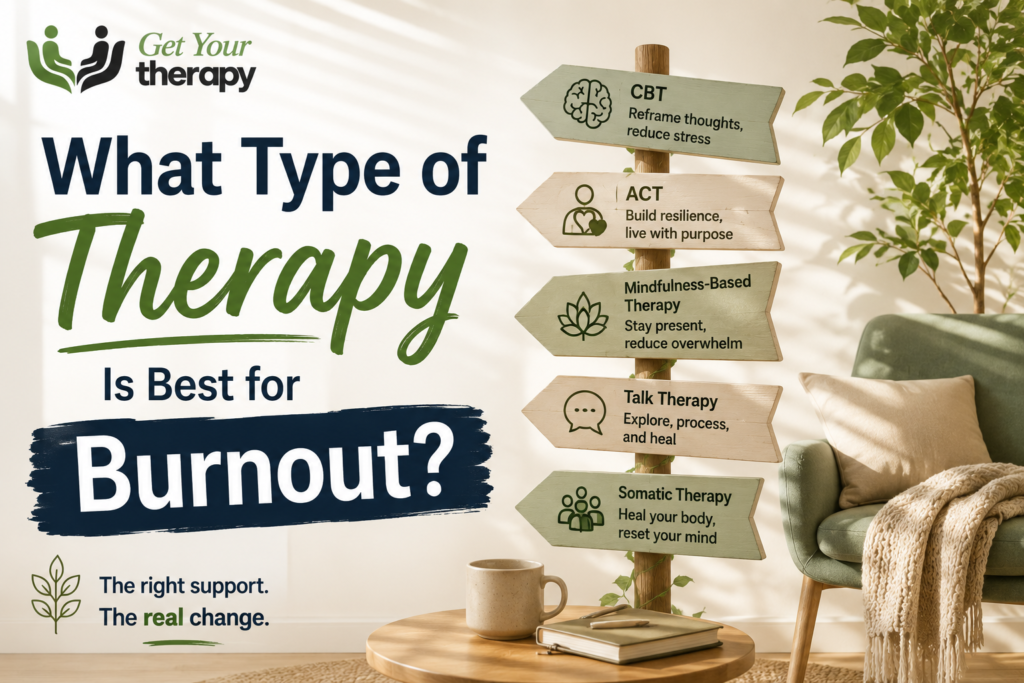
The best therapy for burnout is usually Cognitive Behavioural Therapy (CBT) because it helps identify the thoughts, habits, and workplace patterns that keep burnout going. However, CBT isn’t the only effective option. Depending on what’s causing your burnout, approaches like Acceptance and Commitment Therapy (ACT), mindfulness-based therapy, or stress management counselling may be a better fit.
The good news?
You don’t need to figure this out on your own. A qualified therapist will recommend the most suitable approach after understanding your symptoms, work environment, and personal goals.
Quick Answer
If you’re experiencing emotional exhaustion, loss of motivation, or ongoing workplace stress, therapy for burnout can help. Research consistently shows that CBT is one of the most effective treatments for burnout, while ACT and mindfulness-based therapies also help many people recover by improving emotional resilience and reducing chronic stress.
In 30 Seconds
If you’re short on time, here’s what you need to know.
- ✔ CBT is the most researched therapy for burnout.
- ✔ ACT helps if you’re emotionally exhausted or feel disconnected from work.
- ✔ Mindfulness therapy can reduce chronic stress.
- ✔ There isn’t one “perfect” therapy, the best therapy is the one that fits your burnout.
- ✔ The sooner you seek help, the easier recovery usually becomes.
Which Therapy Is Best for Burnout?
| Therapy | Best For |
|---|---|
| Cognitive Behavioural Therapy (CBT) | Negative thinking, perfectionism, chronic workplace stress |
| Acceptance and Commitment Therapy (ACT) | Emotional exhaustion, values, work-life balance |
| Mindfulness-Based Therapy | Stress reduction and emotional regulation |
| Solution-Focused Therapy | Workplace challenges and practical problem-solving |
| Counselling / Supportive Therapy | Emotional support during burnout recovery |
For most people, CBT is the first choice because it has the strongest evidence for reducing burnout symptoms. It helps you recognise unhealthy thinking patterns such as “I have to be productive all the time” or “I can’t say no,” and replace them with healthier behaviours that reduce long-term stress.
ACT takes a different approach. Instead of trying to eliminate difficult thoughts, it helps you stop fighting them and reconnect with what actually matters to you. This can be especially helpful if burnout has left you feeling emotionally numb or disconnected from work.
What Nobody Tells You About Burnout Therapy?
Many people think therapy teaches you how to handle more work.
It doesn’t.
Good therapy helps you stop believing that your worth depends on how much you produce.
That’s often the real problem.
Burnout isn’t always caused by having too much work. Sometimes it’s caused by never feeling like you’ve done enough.
That’s why two people can have the same job and the same workload, yet only one experiences burnout.
If you’re still wondering whether what you’re feel is actually burnout, our guide on Signs of Burnout at Work can help you recognise the early warning signs before deciding what kind of support you need.
How Do You Know Which Therapy Is Right for You?
One of the biggest misconceptions about burnout therapy is that you have to choose the “right” type of therapy before booking an appointment.
You don’t.
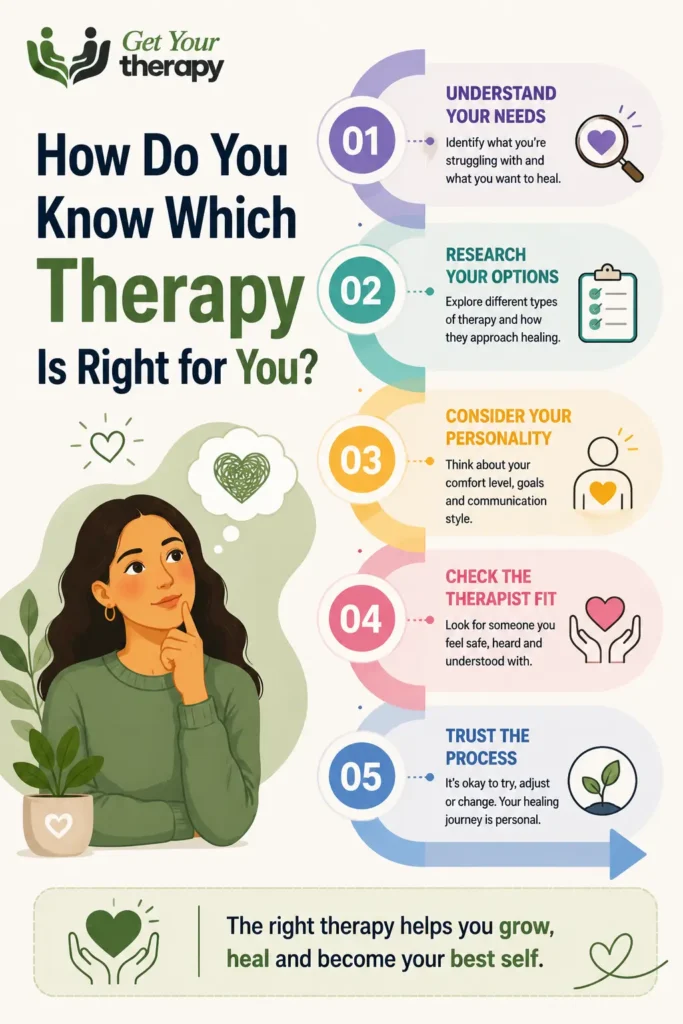
Your therapist will recommend an approach based on your symptoms, personality, and what’s contributing to your burnout. The goal isn’t to fit you into a therapy model. It’s to find a treatment plan that works for you.
As a general guide:
- Choose CBT if you constantly overthink, struggle with perfectionism, or find it difficult to switch off from work.
- Choose ACT if you feel emotionally exhausted, disconnected from your work, or unsure what matters to you anymore.
- Choose mindfulness-based therapy if stress feels constant and you struggle to relax, even outside work.
- Choose supportive counselling if you mainly need a safe space to process work stress, major life changes, or emotional exhaustion.
The best therapy for burnout isn’t always the one with the most research.
It’s the one you’ll actually continue.
A therapist you trust will almost always help you more than the “perfect” therapy approach with someone you don’t feel comfortable talking to.
Common Myth
“Therapy will tell me to quit my job.”
Not necessarily.
A good therapist with the best therapy for burnout won’t tell you what decision to make. Instead, they’ll help you understand why you’re feeling burned out and whether the problem comes from your workplace, your boundaries, perfectionism, people-pleasing, or something else entirely.
Sometimes people stay in the same job and recover. Sometimes they realise they need a change.
Therapy helps you make that decision with clarity rather than exhaustion.
You Don’t Need to Reach Breaking Point
Many people wait until they can’t get out of bed, start having panic attacks, or completely lose motivation before seeking help.
That’s one of the biggest mistakes.
The best time to start therapy for burnout is when you first notice that work is changing who you are, not after it already has.
If you’re wondering whether professional support is the right next step, our guide on Signs You Need Therapy for Burnout can help you decide. If this is your first appointment, reading What to Expect in Your First Therapy Session can make the process feel much less overwhelming. Once you begin, learning How to Get the Most Out of Therapy will help you make every session count.
At GetYourTherapy, you can connect with qualified therapists experienced in workplace burnout, chronic stress, and emotional exhaustion. Together, you can find an approach that helps you recover—not just return to work, but feel like yourself again.
👉 Find the Right Therapist
Sources
- World Health Organization (WHO): Burnout in ICD-11
- American Psychological Association (APA): Understanding Burnout
- National Institute for Health and Care Excellence (NICE): Common Mental Health Problems
- Mayo Clinic: Job Burnout – Symptoms and Causes