

Yes, therapy for burnout can help if you’ve been feeling emotionally exhausted, disconnected from work, or unable to recover even after taking time off. If burnout has started affecting your sleep, relationships, motivation, or overall wellbeing, it’s a sign that you may need more than just another weekend off.
Most people don’t realise they need therapy because of one bad day.
They realise it after months of saying, “I’ll feel better once this project is over.”
If that project keeps changing but the exhaustion doesn’t, it’s worth paying attention.
Quick Answer
Therapy for burnout helps you understand why you’re feeling emotionally exhausted, identify the patterns causing chronic stress, and develop healthier ways to recover. It isn’t about teaching you to tolerate an unhealthy life it’s about helping you build one that doesn’t constantly leave you drained.
In 30 Seconds
You may benefit from therapy for burnout if:
✔ Rest no longer helps.
✔ You dread going to work every morning.
✔ You’re emotionally numb.
✔ You’re constantly thinking about quitting.
✔ Your work stress is affecting your life outside work.
If these sound familiar for several weeks, therapy is worth considering.
How Do You Know If You Need Therapy for Burnout?
Instead of counting symptoms, ask yourself these questions.
1. Does Rest Actually Make You Feel Better?
Everyone feels tired after a demanding week.
Burnout is different.
If you’ve taken weekends off, slept more, or even gone on holiday but still feel exhausted, your body may be resting while your mind isn’t recovering. That’s one of the strongest signs you could benefit from therapy for burnout.
2. Do You Feel Like a Different Person?
Here’s something most articles won’t tell you.
Burnout doesn’t just steal your energy. It slowly steals your identity.
- Patient colleague becomes irritable.
- Ambitious employee loses motivation.
- Person who loved their work starts counting the hours until the day ends.
If you’re wondering where “the old you” went, don’t ignore that feeling.
3. Is Work Following You Home?
Burnout rarely stays inside the office.
- You stop enjoying weekends because you’re already thinking about Monday.
- You’re distracted with family.
- You cancel plans because you’re too tired.
If work has started taking over every part of your life, it may be time to seek support.
If you’re still unsure whether what you’re experiencing is burnout, read our guide on Signs of Burnout at Work before deciding your next step.
4. Have You Tried Everything Except Asking for Help?
- You’ve promised yourself better boundaries.
- You’ve taken leave.
- You’ve slept more.
- You’ve tried being “more positive.”
Nothing seems to last.
That’s because burnout isn’t always caused by a lack of rest. Sometimes it’s caused by unhealthy expectations, perfectionism, people-pleasing, or chronic workplace stress. Therapy helps uncover what’s keeping you stuck.
What Nobody Tells You About Burnout?
People often think therapy is the last step. It shouldn’t be.
The best time to start therapy for burnout is before you reach breaking point.
Most people burn out because they’ve spent months being strong for everyone else while ignoring what they needed themselves.
Burnout doesn't happen because you're weak. It happens because you've been carrying more than one person should carry for far too long.
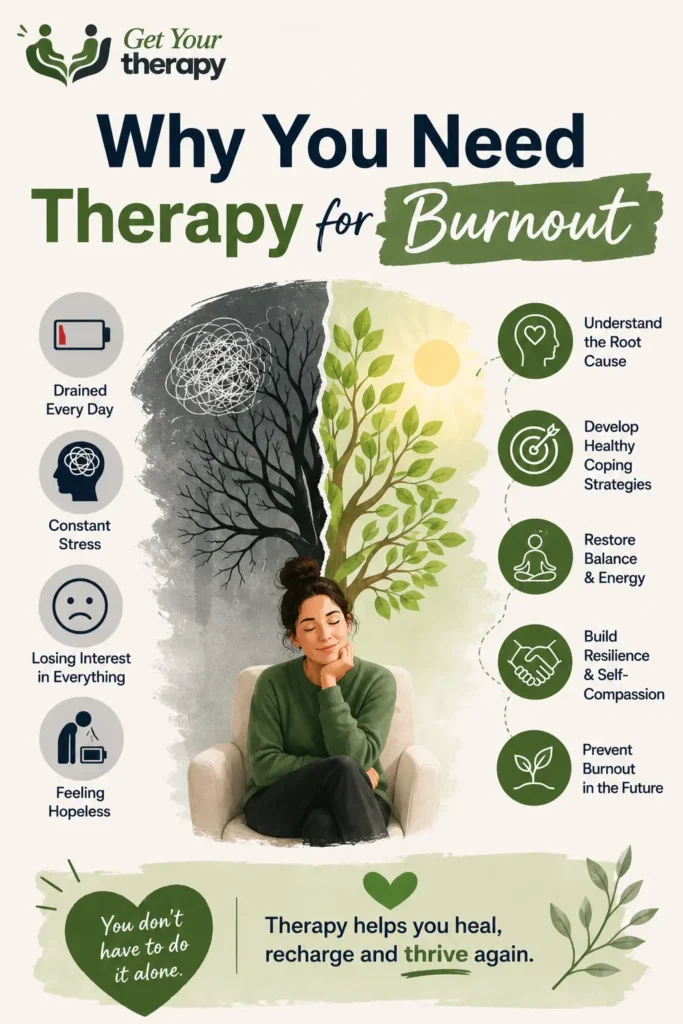
Can Therapy Actually Help Burnout?
Yes, but probably not in the way you imagine.
Therapy isn’t simply talking about work for an hour every week.
A therapist helps you recognise patterns that keep burnout going, such as perfectionism, difficulty saying no, guilt around resting, or tying your self-worth to productivity.
Depending on your needs, therapy may focus on:
- Setting healthier boundaries.
- Managing chronic stress and anxiety.
- Challenging perfectionist thinking.
- Rebuilding confidence after burnout.
- Creating a realistic recovery plan.
If this would be your first session, understanding what to expect in your first therapy session can make getting started feel much less intimidating. Once you begin, learning how to get the most out of therapy can help you see meaningful progress sooner.
Common Myth
“I’ll start therapy if things get worse.”
The problem is that burnout usually gets worse quietly.
By the time most people ask for help, they’re no longer trying to enjoy life. They’re simply trying to get through the week. The earlier you seek support, the easier recovery usually becomes.
Maybe You Don’t Need Another Holiday
Maybe you need someone to help you understand why you’re exhausted in the first place.
Whether your burnout comes from work, unrealistic expectations, or constantly putting everyone else first, therapy gives you the space to understand what’s happening instead of simply surviving it.
👉 Find the Right Therapist for Burnout
One Thought Before You Go
If you’ve spent months telling yourself,
- “I’ll slow down after this deadline.”
- “Things will get easier next month.”
- “Everyone feels like this.”
Ask yourself one question.
When was the last time you genuinely felt like yourself?
If you can’t remember the answer, don’t ignore it.
Sometimes asking for help isn’t a sign you’ve reached your limit. It’s the decision that stops you from getting there.